
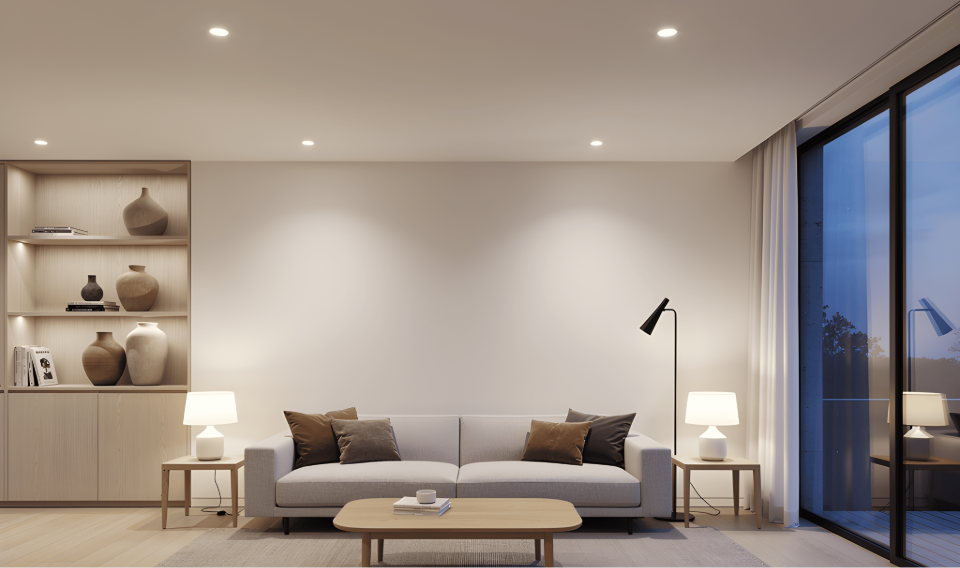
Downlights: The Complete UK Guide to Choosing the Right Fitting
Downlights have become the most widely chosen ceiling light across UK homes and commercial spaces — and it is easy to understand why. Their low-profile, recessed design works across virtually every room, from compact hallways in new builds to open-plan kitchen and living areas where pendant lights simply would not suit. But with so many variations available, choosing the right downlight involves more than picking a style you like.
This guide covers everything you need to make a confident decision — including IP ratings and where each one is appropriate, fire rating guidance for UK homes, the difference between LED and GU10 fittings, dimmable downlight compatibility, colour temperature, and the finishes available.
What Are Downlights and How Do They Work?
Downlights are recessed ceiling light fixtures that sit flush within the ceiling surface and direct light downwards into the room. The fitting is installed through a cut-out in the plasterboard, with only the trim or bezel remaining visible from below. This low-profile installation is why downlights have become a preferred choice in modern UK homes, particularly where ceiling heights are limited and bulkier hanging fixtures are not practical.
Inside the fitting, the light source — either an integrated LED module or a replaceable lamp such as a GU10 bulb — sits within a secure housing, held in place by spring clips that grip the ceiling from within the void. A transformer or driver regulates the power supply, and the trim or bezel provides the finished face of the fitting against the ceiling surface.
Trim vs Trimless
Trim downlights have a visible outer rim that sits against the ceiling surface. They are straightforward to install and, if the driver or light source ever needs attention, relatively easy to remove and access. Trimless downlights are designed to sit completely flush within the ceiling with no visible rim, creating a seamless architectural finish. They tend to sit deeper within the ceiling void, which can make maintenance more involved, and they typically carry a higher initial cost — but for those prioritising a clean, minimal aesthetic, they are a popular choice.
IP Ratings Explained: Which Downlight Do You Need for Each Room?
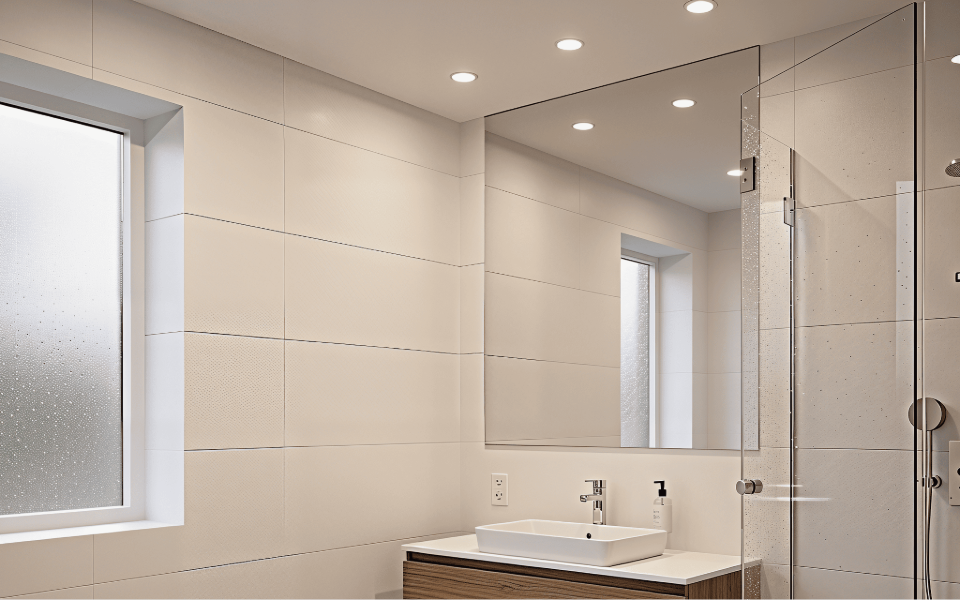
An IP rating — Ingress Protection rating — is an internationally recognised standard that defines how well an electrical fitting is sealed against the entry of particles and moisture. For downlights, which are recessed directly into ceilings and create an opening between the room below and the void above, selecting the appropriate IP rating for the location is an important part of any installation.
The IP rating is expressed as two digits. The first digit, on a scale of 0 to 6, indicates the level of protection against the ingress of particles — ranging from no protection at zero through to complete dust-tight sealing at six. The second digit, on a scale of 0 to 9, indicates the level of protection against moisture — ranging from no protection at zero through to resistance against high-pressure water at the upper end.
Most downlights sold in the UK fall into one of three standard IP ratings:
IP20 Downlights carry no moisture protection and are suitable for dry indoor areas only. These work well in living rooms, bedrooms, hallways, and dining areas. Where used in a kitchen, it is advisable to keep them at least 60cm away from any sink or hob area to avoid prolonged exposure to steam.
IP44 Downlights offer a higher degree of sealing, providing reliable protection against moisture contact from any direction. These are well suited to bathroom zone 2 — the area extending at least 60cm horizontally from the edge of a bath or shower, up to a height of 225cm — as well as above-sink areas in kitchens and cloakrooms.
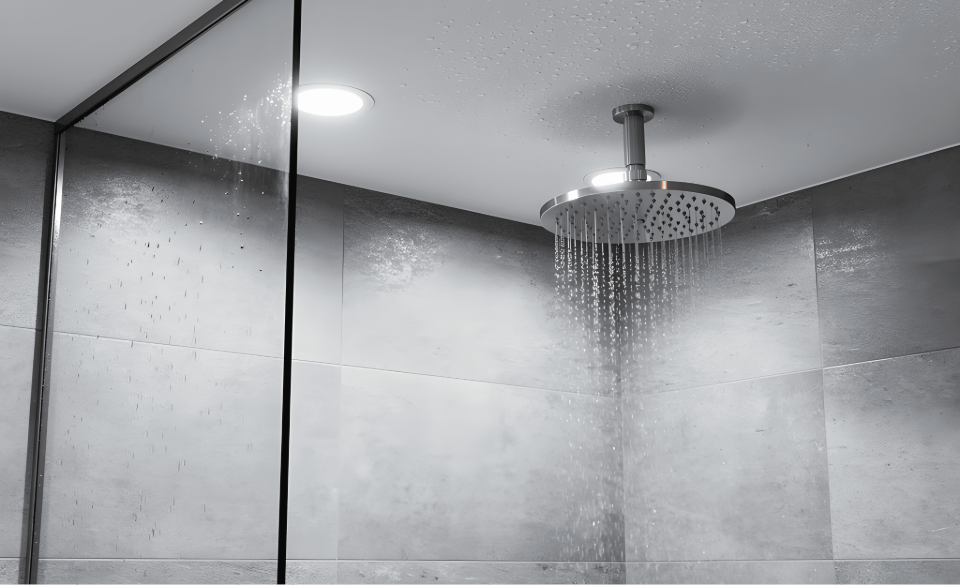
IP65 Downlights provide complete particle protection and resistance to water projected from a nozzle or jet, making it the appropriate choice for bathroom zone 1 — the area directly above and immediately surrounding a bath or shower, up to 225cm in height — as well as outdoor soffits and covered external locations. Many modern integrated LED downlights now carry IP65 as standard, making them a versatile option suitable for use throughout the home.
| Room/Location | Recommended IP Rating | Notes |
| Living Room | IP20 | Dry area, no moisture exposure |
| Bedroom | IP20 | Dry area, no moisture exposure |
| Hallway | IP20 | Dry area, no moisture exposure |
| Kitchen (general ceiling) | IP20 | Suitable for most kitchen ceiling areas |
| Kitchen (above sink) | IP44 | Recommended where splashing or steam may occur |
| Bathroom zone 2 | IP44 | Suitable within Zone 2 of a bathroom |
| Bathroom zone 1 | IP65 | Suitable for areas directly above baths and showers |
| Shower area | IP65 | Suitable for direct water exposure |
| Outdoor soffit | IP65 | Suitable for covered outdoor installations |
Fire Rated vs Non-Fire Rated Downlights: Do You Need One?
Installing a recessed downlight requires cutting a hole through the plasterboard ceiling, and in doing so, it creates a gap in what would otherwise be a continuous barrier within the ceiling structure. In homes where a ceiling separates one occupied floor from another — or where the ceiling sits below a loft space or roof void — this opening can compromise the ability of the structure to slow the spread of fire and smoke between levels.
Fire rated downlights are designed to address this. They incorporate an intumescent pad within the fitting which, when exposed to intense heat, expands to seal the cut-out opening and restore the integrity of the ceiling, preventing flames and hot gases from passing through to the space above for a defined period of time. This helps the ceiling continue to meet the fire resistance standards set out under UK Building Regulations Part B (Fire Safety), by restoring the fire barrier that the cut-out would otherwise compromise.
Standard fire rated downlights are tested and classified across three time ratings:
30-minute fire-rated downlights are commonly used in domestic installations where a lower level of fire resistance is required — such as a ceiling beneath an uninhabited loft space or a standard truss roof void. They provide a baseline level of protection and are the most commonly specified option for straightforward domestic applications.
60 minutes is the rating generally recommended for ceilings in multi-storey homes, where a ceiling directly separates one occupied floor from another. If a property has had a loft conversion, the ceiling below the new living space is typically upgraded to a 60-minute rated fitting to maintain appropriate separation between the new habitable room and the floor below.
90 minutes is primarily associated with commercial buildings, apartment blocks, high-rise residential developments, and other environments where a higher degree of fire compartmentalisation is called for.
Beyond fire protection, fire rated downlights offer additional practical benefits — they reduce cold draughts travelling through the ceiling void and help maintain the thermal performance of the room. For these reasons, they are often a sensible choice even in situations where a fire rated fitting may not be specifically called for.
| Scenario | Fire rated downlight advisable? |
| Single-storey home, ceiling below uninhabited loft or roof void | Usually not required, but often preferred |
| Between floors in a multi-storey house | Yes |
| Flat with another flat or occupied room above | Yes |
| Loft conversion-ceiling below new living space | Yes |
| Garage ceiling below a habitable room | Yes |
| Single-storey extension with no room above | Usually not required, but often preferred |
| New-build house | Yes |
| Replacement of existing downlights | Match existing fire protection requirements |
LED vs GU10 Downlights: Which Should You Choose?
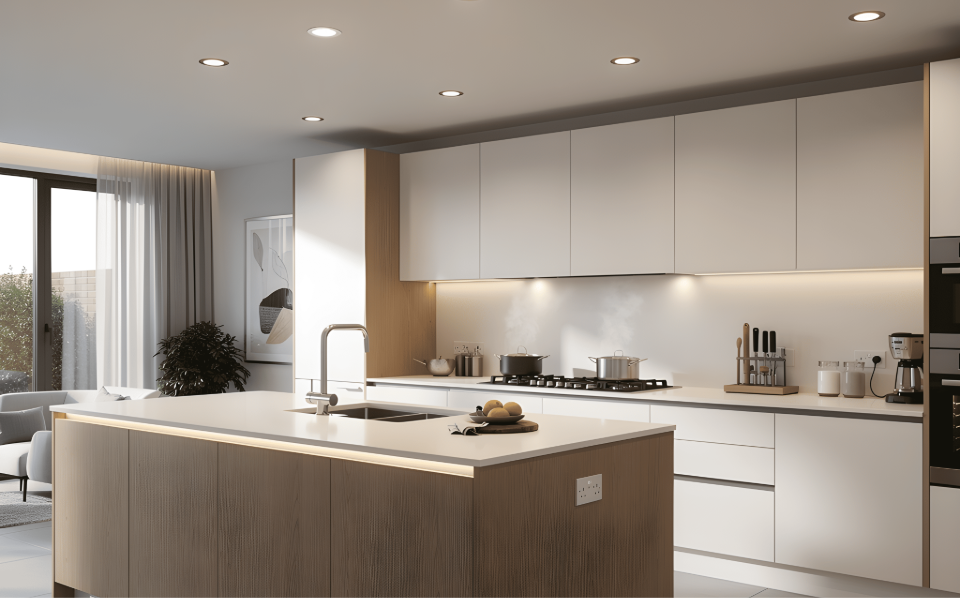
The choice between an integrated LED downlight and a GU10 downlight is one of the most frequently asked questions when specifying recessed lighting — and both have clear merits depending on the property and the application.
Integrated LED downlights are supplied as a complete unit, with the LED module, driver, and housing all built into a single fitting designed to work together. Because there is no separate lamp to accommodate, integrated LED fittings tend to sit closer to the ceiling surface, which suits modern interiors and properties with lower ceiling heights. They are a natural fit for new builds and contemporary renovation projects where a clean, flush finish is a priority. It is worth noting, however, that if the LED module reaches the end of its life, the complete fitting will typically need to be replaced rather than just the light source — a consideration worth factoring in for larger installations or commercial projects.
GU10 downlights use a fitting that accepts a replaceable GU10 lamp, which can be changed independently of the fixture itself. If a lamp fails, it can be swapped quickly and straightforwardly without needing to disturb the fitting or the ceiling. GU10 fittings are also a practical choice for period properties or where an existing cut-out is being reused, as they can often be retrofitted without modification to the opening. The option to change the lamp also means wattage or colour temperature can be adjusted at a later stage by simply replacing the bulb.
Both types are available with dimmable options — though it is important to confirm that the specific fitting and its driver are rated as dimmable before purchase, as not all LED downlights, whether integrated or GU10, are compatible with dimmer switches. More on this in the section below.
Dimmable Downlights: Compatibility and What to Avoid
Dimmable downlights allow light output to be adjusted using a compatible dimmer switch, helping create the desired atmosphere while reducing energy consumption.
Not all LED downlights are dimmable. Some are fitted with non-dimmable drivers, and connecting these to a dimmer switch can at best cause flickering and at worst result in damage to the fitting — and may also affect the manufacturer’s warranty. Always confirm that the fitting is specifically stated as dimmable before purchase.
Trailing-edge dimmers are the recommended choice for modern LED downlights. They are designed to work with the lower wattage loads that LED drivers draw, operating quietly and providing a smooth, consistent dimming range.
Leading-edge dimmers are often incompatible with LED downlights and may cause flickering, buzzing, reduced dimming performance, or shortened driver lifespan.
A few things worth checking before installing dimmable downlights:
- Confirm the fitting is rated as dimmable — not all LED downlights are
- Use a trailing edge dimmer switch designed for LED loads
- Avoid mixing different brands of downlight on the same dimmer circuit, as differing driver specifications can cause instability
- Check the dimmer’s minimum load rating — some dimmers require a certain minimum wattage on the circuit to operate correctly, which can be a consideration when running low-wattage LED fittings
When installing dimmable LED lighting, always check the total circuit load and the dimmer’s minimum load requirement. Modern LED lamps consume significantly less power than traditional halogen fittings, meaning a circuit with several LED downlights may not provide enough load for older dimmer switches. This can result in flickering, buzzing, poor dimming performance, or lights failing to switch off correctly.
To achieve smooth, flicker-free dimming, choose a high-quality LED-compatible trailing-edge dimmer with a low minimum load rating and ensure it is compatible with your chosen LED fittings. If you’re unsure which dimmer switch is compatible with your downlights, browse our range of Dimmers.
Adjustable vs Fixed Downlights: Which Is Right for Your Space?
Fixed downlights produce a vertical beam of light directed straight downwards, making them the natural choice for general ambient lighting where an even, consistent spread across the room is the aim. They sit completely flush with the ceiling surface with no visible gap around the fitting, which contributes to a clean, uninterrupted ceiling line and provides a degree of airtightness that can help reduce heat loss through the ceiling void.
Adjustable downlights — also referred to as tiltable or gimbal downlights — feature an inner bezel that can be directed at an angle, allowing the beam to be aimed at a specific point in the room. This makes them well suited to accent lighting, highlighting artwork or architectural features, illuminating kitchen worktops or shelving, or compensating for angled or sloped ceilings where a fixed vertical beam would not fall where it is needed. The tilting mechanism introduces a small gap around the bezel, and in some styles a split ring is visible around the lens — a minor visual trade-off for the directional flexibility they offer.
Downlights are available across a broad range of finishes, from understated options such as white and satin chrome that sit quietly against the ceiling, to warmer, more distinctive choices including polished brass, antique brass, and satin nickel that bring a sense of character to the fitting. Polished chrome and polished nickel offer a sharp, reflective finish suited to contemporary interiors, while matt black has become a popular choice in modern and industrial-influenced spaces.
Choosing a finish that complements other fixtures in the room — including Designer sockets and switches — tends to give the most considered and cohesive result.
Colour Temperature and CCT Downlights
The colour temperature of a downlight determines the tone and quality of the light it produces, measured in Kelvin (K). It is one of the most important — and most frequently overlooked — decisions when choosing a downlight, as it directly shapes how a space feels once the lights are switched on.
Warm white (2700K–3000K) produces a soft, amber-toned light that is closest in character to traditional incandescent bulbs. It creates a relaxed and inviting atmosphere, making it a popular choice for living rooms, bedrooms, and dining areas where comfort is the priority.
Cool white (4000K) produces a cleaner, crisper light with a neutral tone. It is well suited to kitchens, bathrooms, and home offices where visibility and clarity take precedence over warmth.
Daylight (5000K–6500K) produces a bright, blue-toned light that closely resembles natural outdoor light. It works best in task-focused environments — utility rooms, garages, or commercial spaces — where strong, high-visibility illumination is the primary requirement.
CCT downlights — those with a selectable colour temperature switch — allow the colour tone to be changed between settings within a single fitting, without needing to replace the unit. This is a practical choice for spaces that serve more than one purpose throughout the day, or where there is uncertainty about which tone will suit the room best once installed. It removes the risk of committing to a fixed colour temperature and needing to return or replace fittings after the fact.
Frequently Asked Questions
What is the best downlight for a bathroom?
For bathroom use, IP44 is typically suitable for zone 2 areas — the space extending at least 60cm from the edge of a bath or shower up to a height of 225cm. For zone 1, which covers the area directly above and around the bath or shower up to the same height, IP65 is the appropriate choice. If the bathroom ceiling sits beneath another occupied floor, a fire rated downlight is also strongly recommended.
What is the difference between IP44 and IP65?
IP44 provides protection against moisture contact from any direction, making it suitable for splash-risk locations such as bathroom zone 2 and above kitchen sinks. IP65 provides a higher level of protection — fully sealed against particles and resistant to water projected directly at the fitting — making it the appropriate choice for bathroom zone 1, shower areas, and outdoor installations. Where there is any doubt about which applies, IP65 is the more cautious and versatile option.
Do I need fire rated downlights?
Fire rated downlights are strongly recommended wherever a recessed fitting is installed in a ceiling that separates two occupied spaces — such as between floors in a multi-storey home, beneath a loft conversion, or in a flat with another property above. Even where a fire rated fitting is not specifically called for, they are generally considered good practice, as they also help limit draughts and heat loss through the ceiling void.
Can I use dimmable downlights with any dimmer switch?
No. Modern dimmable LED downlights require a trailing edge dimmer switch designed for LED loads. Using an older leading edge dimmer — the type commonly found in homes previously wired for halogen lighting — can cause flickering, audible buzzing, and premature damage to the LED driver, and may also affect the manufacturer’s warranty. Always confirm compatibility between the fitting and the dimmer switch before installation.
Recent Posts
-

Alabaster Lighting: A Guide to Styling Alabaster Lights in UK Homes
Alabaster is a fine-grained, mineral-based natural stone prized for centuries in sculpture and arch …12th Oct 2026 -
What Bulbs Do Chandeliers Use? E14, Lumens, Colour Temperature and Dimming Explained
Choosing a chandelier is only part of the decision. The bulbs still need to fit properly, provide t …3rd Oct 2026 -
Rocker, Intermediate, Fan Isolator and Cooker Switches Explained: What Does Each One Do?
Electrical switches can look very similar on the wall while doing very different jobs. Much of the …22nd Sep 2026