
Designer Sockets and Switches: How to Choose the Right Finish
Designer sockets and switches are small details, but they can change how finished a room feels. They sit at eye level or hand height, are used every day and often sit close to other visible finishes such as door handles, cabinet hardware, lighting and radiators.
That makes the finish worth choosing carefully. A switch plate may look good on its own, but it still needs to sit comfortably with the wall colour, nearby hardware and the amount of contrast you want in the room.
For many homeowners, brass finishes are a strong starting point because they add warmth, character and a more considered look. The key is choosing the right type of brass, rather than treating every brass finish as the same.
Quick answer: Which designer sockets and switches finish should you choose?
The best finish depends on the room style, nearby materials and how visible you want the switches and sockets to be. Some finishes are designed to stand out; others are better when you want a softer, more settled look.
| Finish | Best suited to | Overall effect |
| Antique Brass | Classic, period, heritage and warmer interiors | Aged, warm and traditional |
| Satin Brass | Modern homes that still need warmth | Soft, warm and less reflective |
| Polished Brass | Decorative rooms, statement details and brighter schemes | Brighter, more formal and more noticeable |
| Rustic Brass | Country, farmhouse, vintage and character-led interiors | Textured, aged and informal |
| Satin Nickel | Calmer, neutral or more modern interiors | Clean, understated and neutral |
Why designer sockets and switches matter in a finished room
Standard white plastic fittings can work perfectly well from a practical standpoint, but they are not always the best visual choice. In a carefully planned room, they can stand out for the wrong reason, especially against darker paint, patterned wallpaper, natural materials or premium hardware.
That is why it helps to start with the room, not just the product page. A warm brass plate may suit one scheme beautifully, while a satin nickel socket may feel more appropriate in another.
| Arrow Finish Insight: Arrow’s internal sales feedback indicates that brass finishes are among the strongest-performing choices for designer sockets and switches. That makes Antique Brass, Satin Brass, Polished Brass and Rustic Brass useful finishes to compare when choosing Heritage Brass sockets, switches and matching accessories. |
Antique Brass: best for classic warmth
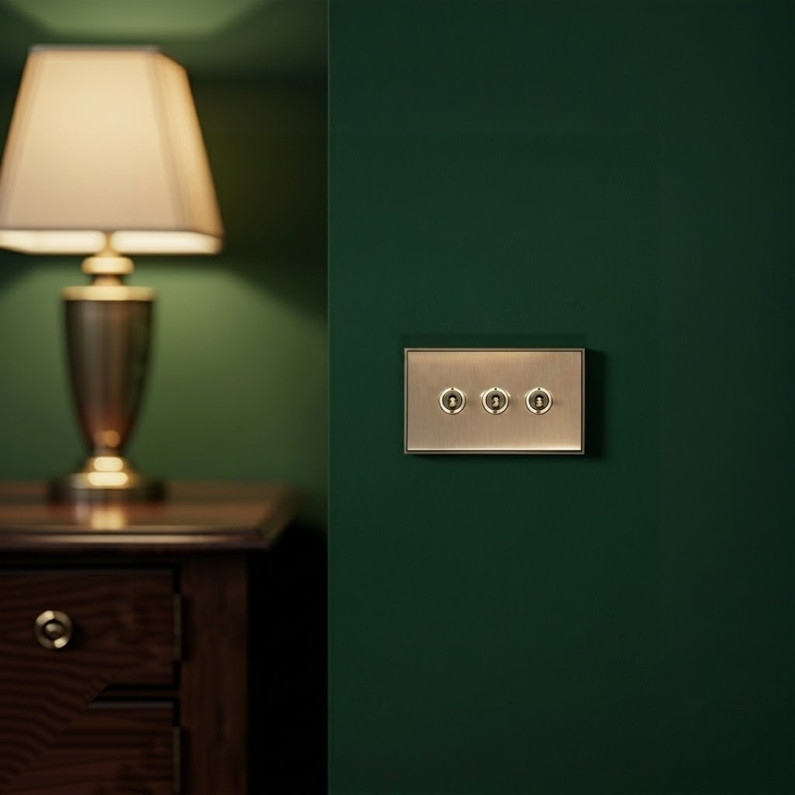
Antique Brass is often one of the easiest brass finishes to use in rooms with a traditional or heritage feel. Its warmer, aged character can sit comfortably alongside timber, darker paint colours, panelled walls, fireplaces and classic door furniture.
It is especially useful when new switches and sockets need to feel less stark in a period property or renovation. The main thing to watch is contrast: Antique Brass can look rich and considered, but may feel heavy in very minimal interiors built around cooler greys, whites and chrome finishes.
Satin Brass: best for softer modern warmth
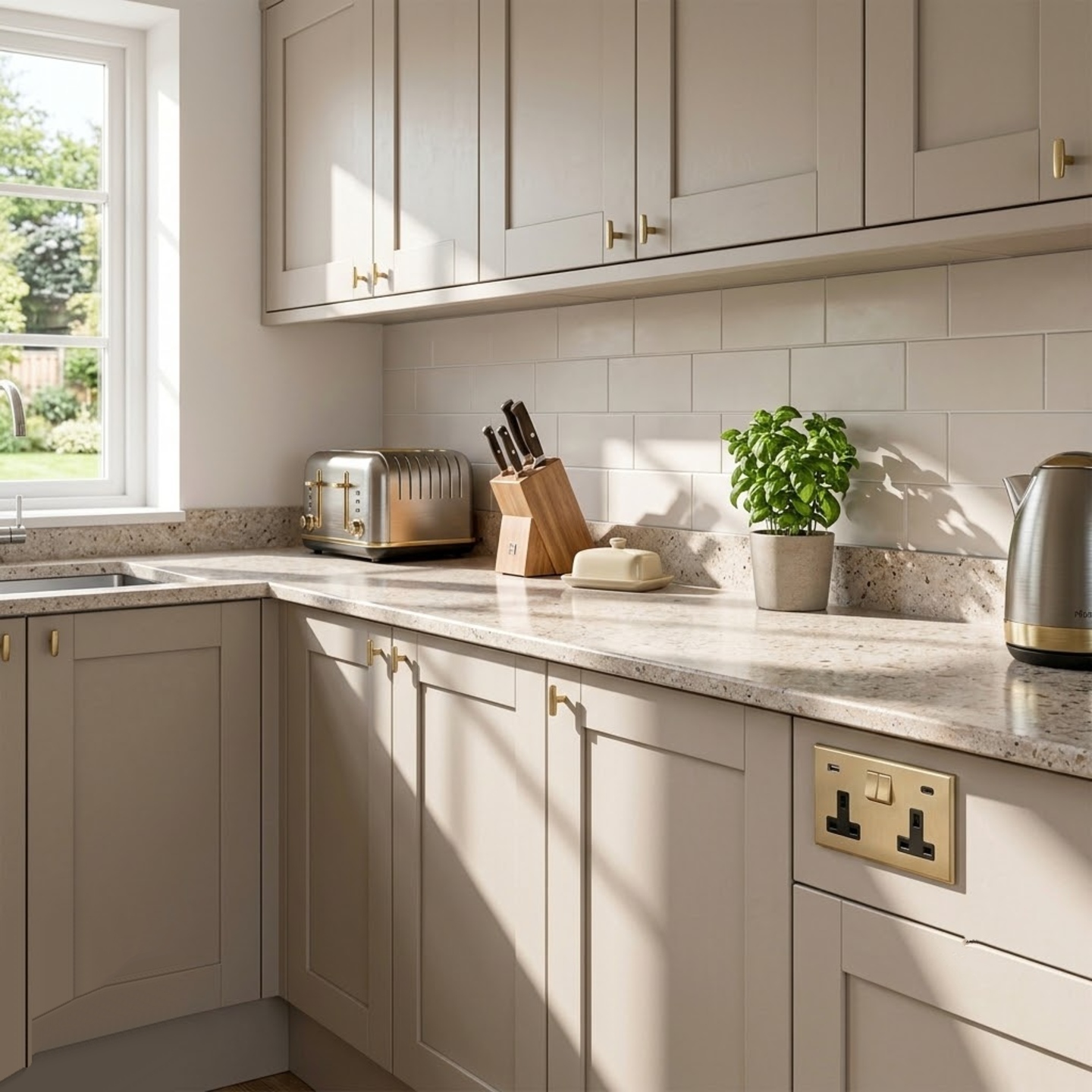
Satin Brass is a good choice when you want warmth without a highly polished look. Satin Brass switches and sockets suit many modern homes because the finish feels softer and less reflective than polished brass.
This makes it useful in kitchens, bedrooms and living rooms where the fittings need to look premium but not overly decorative. If polished brass feels too bright and antique brass feels too traditional, satin brass often gives enough warmth without making the fitting the loudest detail in the room.
Polished Brass: best for brighter decorative detail
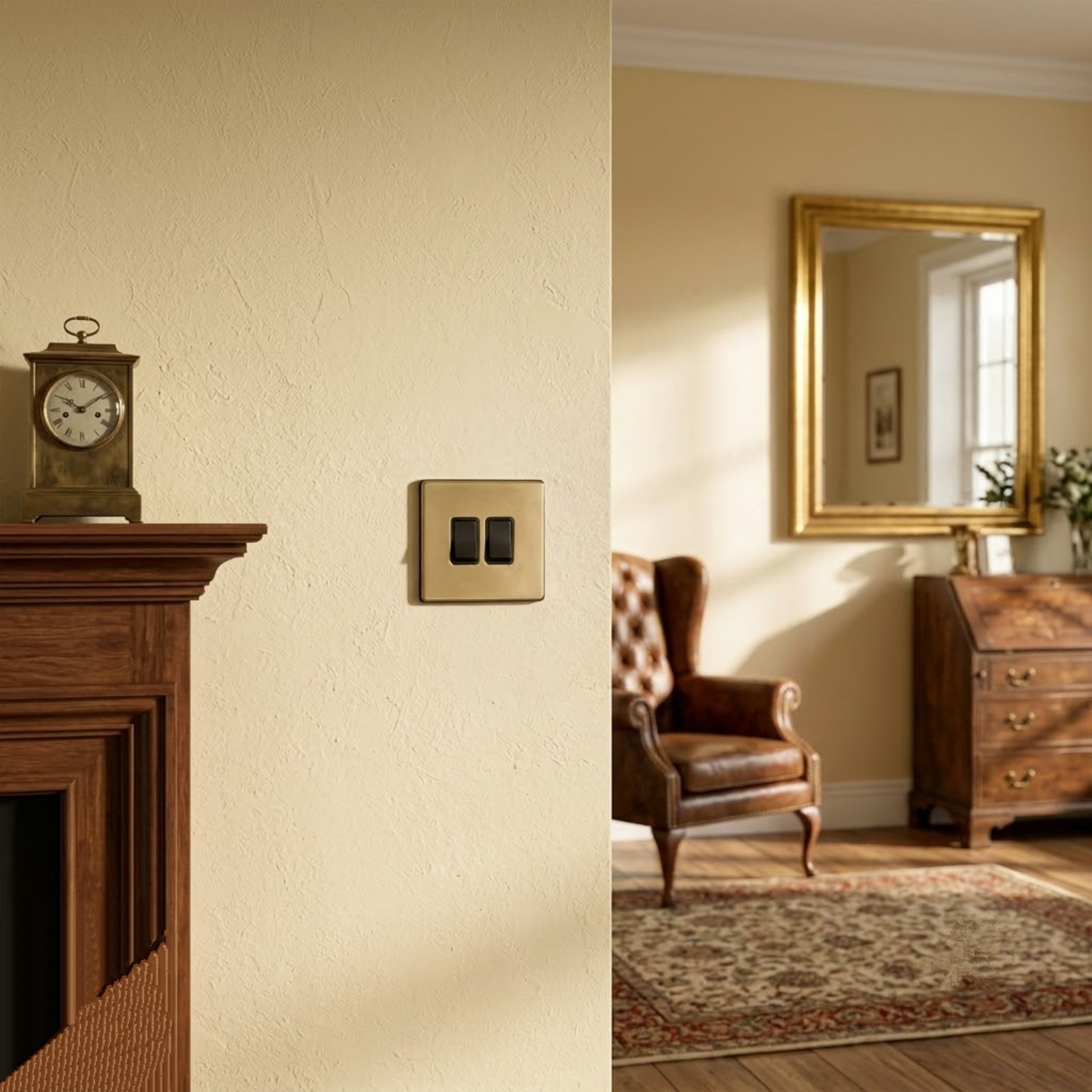
Polished Brass is the finish to consider when the switch or socket is intended to be seen. Its brighter, more reflective quality can connect well with brass lighting, mirror frames, cabinet handles, taps or statement hardware.
The risk is overuse. If every visible detail is polished and reflective, the room can start to feel too busy. Polished Brass is often strongest when it has something to echo nearby, but still has enough breathing room around it.
Rustic Brass: best for character and aged interiors
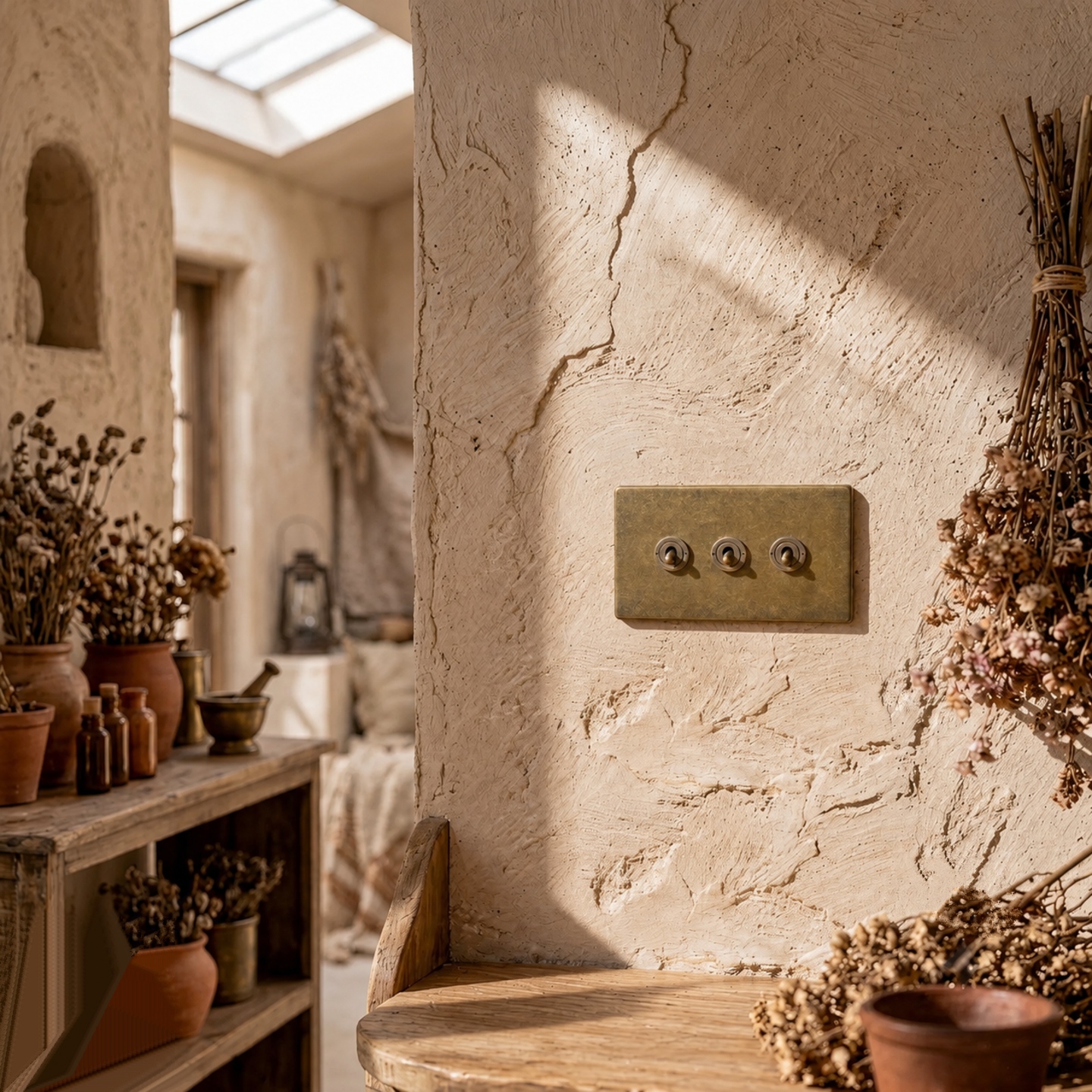
Rustic Brass has a more aged, informal character. It is well suited to country homes, farmhouse-style interiors, cottages, vintage schemes and rooms where the finish should feel lived-in rather than polished.
This type of brass can work especially well with textured walls, exposed brick, timber beams, stone floors and darker heritage paint colours. Rustic Brass may feel less natural in very sleek or minimal spaces unless the intention is to create deliberate contrast.
Satin Nickel: when brass is not quite right
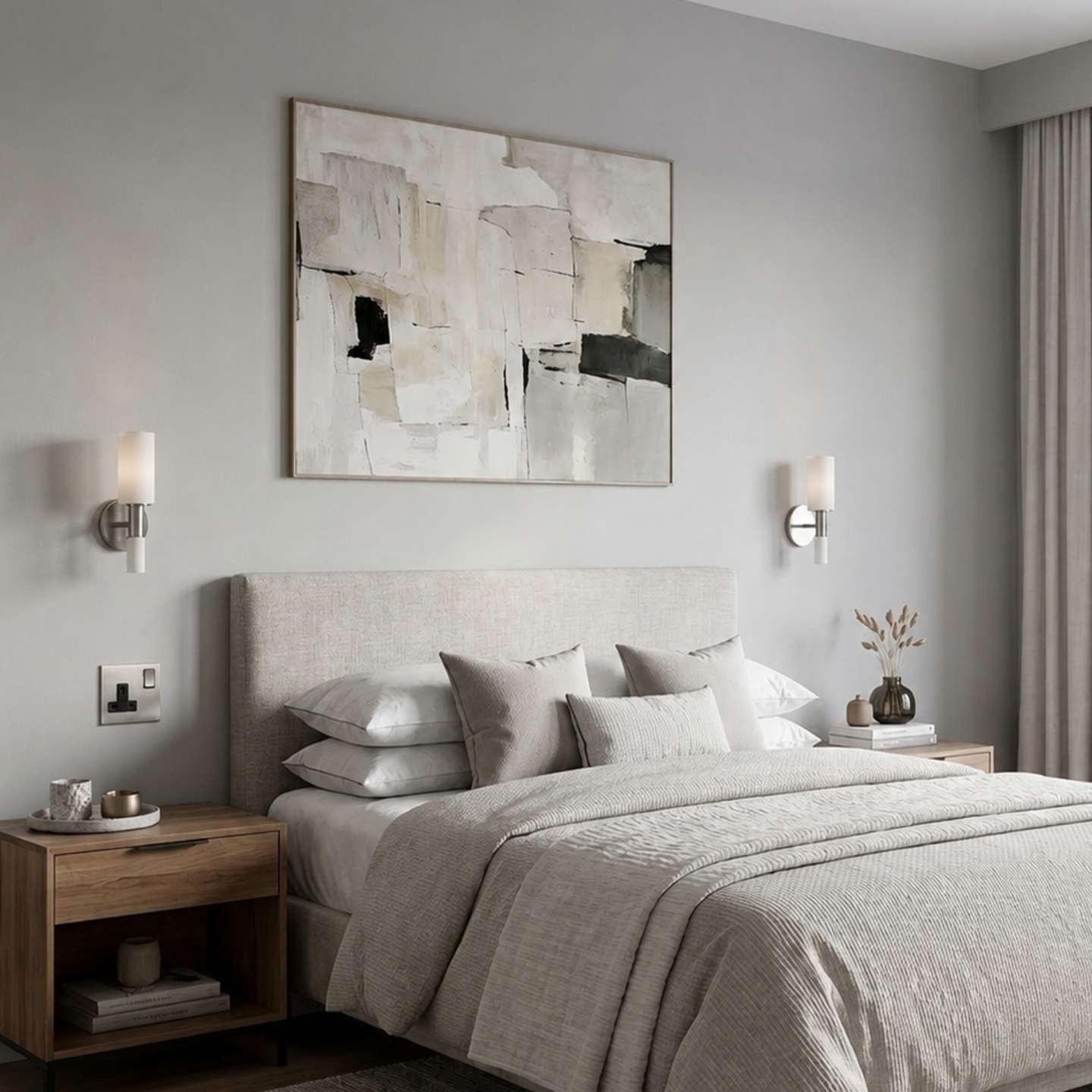
Not every room needs a warm metal finish. Satin Nickel is worth considering when the room leans calmer, more neutral or more contemporary.
Satin Nickel sockets and switches suit grey tones, white walls, cooler stone, stainless steel appliances, chrome lighting and modern bathrooms or kitchens. It is calmer than brass, but not cold; its softer grey tone can help a fitting look considered without drawing too much attention.
For this reason, Satin Nickel works best as a complementary option rather than the main focus of a brass-led scheme. It gives readers another route if they like the idea of premium switches and sockets but do not want a gold or brass-toned finish.
How to choose a finish by room
The same finish can look different depending on the room. Wall colour, natural light, furniture and nearby hardware all affect how visible the switches and sockets feel.
| Room or area | Finish worth considering | Why it works |
| Living rooms | Antique Brass, Satin Brass or Polished Brass | These finishes can connect with lighting, handles and warmer decorative details |
| Kitchens | Satin Brass, Polished Brass or Satin Nickel | It can be matched to cabinet handles, taps, appliances or lighting |
| Hallways | Antique Brass or Rustic Brass | Warmer finishes can add character to transitional spaces |
| Bedrooms | Satin Brass or Satin Nickel | Softer finishes tend to feel calmer and less visually sharp |
| Period or cottage-style rooms | Antique Brass or Rustic Brass | Aged finishes usually sit better with traditional materials and detailing |
What to check before buying premium switches and sockets
Finish is important, but it is not the only decision. Before choosing premium switches and sockets, check the practical details too.
Think about whether you need rocker switches, dolly switches, dimmers, sockets, USB sockets, cooker switches, data sockets or matching blank plates. A finish may be available in one product type but not always in every configuration you need.
Any electrical installation or replacement work should be carried out safely and in line with the relevant UK electrical regulations, using a qualified electrician where required.
You should also check the plate style and wall condition. Some flat plate designs need a neat, level wall surface to sit correctly. If the wall is uneven, an alternative plate profile may be more forgiving.
Finally, consider consistency. The goal does not have to be matching every single fitting in the home, but the choices should look intentional. For example, Heritage Brass light switches in one finish and Heritage Brass sockets in another can work, but only if the contrast is planned.
Common mistakes when choosing designer switches and sockets
The first mistake is choosing the finish before thinking about the room. A finish that looks good online can feel wrong once it sits against a particular wall colour or beside existing hardware.
The second mistake is assuming all brass finishes look alike. Antique Brass, Satin Brass, Polished Brass and Rustic Brass each create a different effect, so the finish choice should be made deliberately.
The third mistake is ignoring the product type. Switches, sockets, dimmers and data plates all need to work practically, not just visually. A good finish cannot compensate for the wrong configuration.
The fourth mistake is overmatching. A room can feel flat if every metal detail is identical. It is usually better to aim for finishes that relate to each other, rather than forcing every item to match perfectly.
Common Questions Before Choosing Your Finish
These questions cover the practical details buyers often need to check before choosing.
Are designer sockets and switches worth it?
They can be worth it when the fittings are visible and the room has been designed carefully. The benefit is not only the finish itself, but the way the switches and sockets connect with the rest of the interior.
Which brass finish is best for modern interiors?
Satin Brass is often the easiest brass finish for modern interiors because it adds warmth without being too reflective. Polished Brass can also work, but it usually makes a stronger decorative statement.
Should sockets and switches match door handles?
They do not have to match exactly, but they should feel related. If the room already has brass handles, brass switches can help create continuity, while Satin Nickel may work better with cooler chrome or stainless steel details.
Is Satin Nickel better than brass?
Not better, just different. Satin Nickel is usually calmer and cooler, while brass feels warmer and more decorative. The better choice depends on the room and the surrounding finishes.
Choose the finish around the room, not just the plate
The best designer sockets and switches are the ones that feel connected to the room around them. Start with the wall colour, hardware, lighting and overall style, then choose the finish that supports that scheme.
For many interiors, brass finishes bring the right mix of warmth, character and premium detail. Antique Brass, Satin Brass, Polished Brass and Rustic Brass each do that differently. Satin Nickel offers another option when the room needs something cooler and more restrained.
When the finish, product type and room style work together, switches and sockets stop looking like afterthoughts. They feel like part of the room.
Recent Posts
-

Alabaster Lighting: A Guide to Styling Alabaster Lights in UK Homes
Alabaster is a fine-grained, mineral-based natural stone prized for centuries in sculpture and arch …12th Oct 2026 -
What Bulbs Do Chandeliers Use? E14, Lumens, Colour Temperature and Dimming Explained
Choosing a chandelier is only part of the decision. The bulbs still need to fit properly, provide t …3rd Oct 2026 -
Rocker, Intermediate, Fan Isolator and Cooker Switches Explained: What Does Each One Do?
Electrical switches can look very similar on the wall while doing very different jobs. Much of the …22nd Sep 2026