
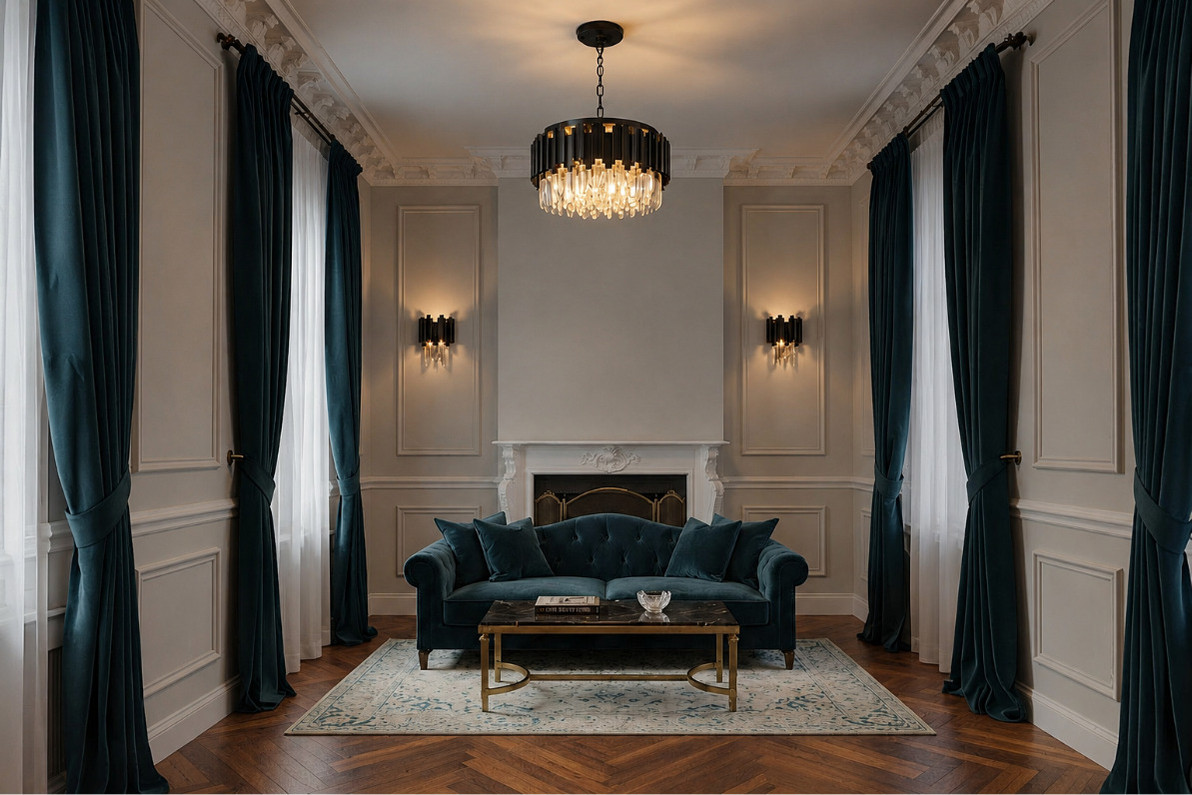
How to Choose a Crystal Chandelier: Styles, Finishes and Practical Checks
A chandelier does more than light a room. It draws the eye upward, changes the mood of the space and can become one of the most memorable features in the home.
That makes it worth choosing carefully. A chandelier may look impressive in a product image, but it still needs to suit the room size, ceiling height, finish scheme, bulb requirements and how the space is actually used.
For homeowners comparing different styles, Arrow Electrical’s range of crystal chandeliers is a useful place to start, with options that work across both classic and more contemporary interiors.
Quick answer: what should you check before choosing a chandelier?
The best chandelier choice usually comes from balancing style with practical detail. A fitting can be visually perfect but still awkward in the room if it hangs too low, feels too wide, gives too much light or is difficult to maintain.
| What to check | Why it matters |
| Room size | The chandelier should feel proportionate, not lost or overwhelming |
| Ceiling height | Drop length and clearance affect comfort and safety |
| Fixture shape | Round, tiered and rectangular chandeliers suit different layouts |
| Finish | Gold, chrome, brass, black and bronze each create a different effect |
| Bulb count | More bulbs can mean more brightness and more maintenance |
| Dimmability | Useful in living rooms, dining spaces and layered lighting schemes |
| Assembly | Some chandeliers may require customer assembly before installation |
| Installation | Larger or heavier fittings should be installed by a qualified electrician |
Why crystal chandeliers remain a popular statement choice
Crystal chandeliers are popular because they combine light, reflection and decorative detail. They can make a room feel more finished, especially where the ceiling area would otherwise look plain.
They are also more flexible than many people assume. A crystal chandelier can feel traditional when paired with warm metals and ornate detailing, but it can also sit comfortably in a modern scheme when the frame is cleaner, darker or more minimal.
| Arrow Sales Insight: Crystal chandeliers are among Arrow’s best-selling chandelier styles. Gold and chrome are currently the most popular finish choices, partly because much of the chandelier collection is available in these finishes. |
Art Deco chandeliers: when decorative detail works best
Art Deco chandeliers suit rooms that can carry stronger visual detail. They often work well in dining rooms, formal living spaces, hallways and stairwells where the light fitting is meant to be noticed.
The style is usually associated with symmetry, metallic finishes, glass, crystal and a sense of glamour. That makes it a natural fit for interiors with polished surfaces, warm metallics, panelled walls, mirrors or decorative furniture.
The main risk is doing too much. If the room already has strong patterns, reflective finishes or ornate furniture, a highly detailed Art Deco chandelier may start to compete with the rest of the scheme. In that case, a simpler crystal or chrome design may provide enough sparkle without making the room feel busy.
Modern black chandelier styles: contrast and contemporary impact
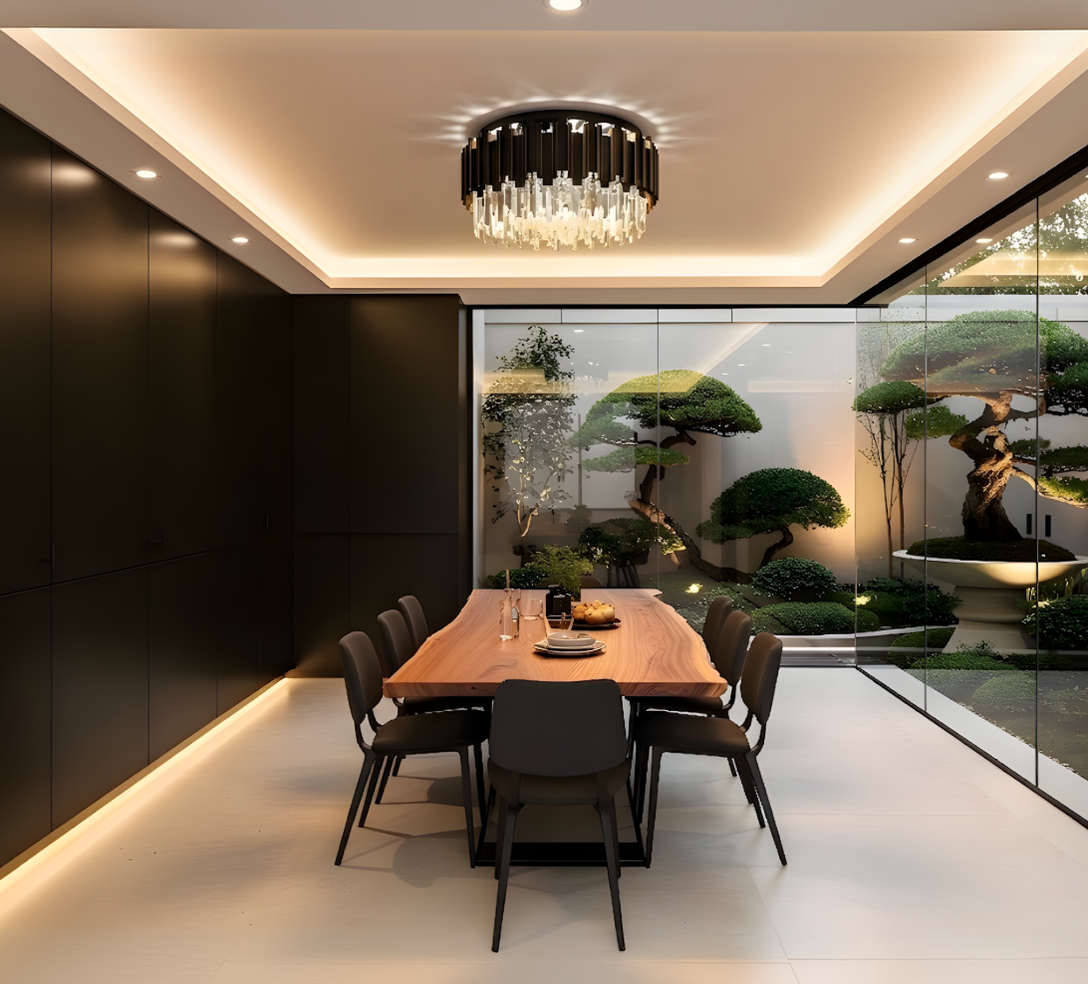
A modern black chandelier works best when contrast is already part of the room. Black frames or black metal detailing can connect well with black window frames, dark cabinet handles, black sockets, stair rails or other strong accents.
This type of chandelier can be especially effective in contemporary living rooms, open-plan spaces and stairwells. It gives the room definition without relying only on sparkle or ornament.
Black fittings can, however, feel visually heavier than chrome or clear crystal designs. In smaller rooms or in spaces with low ceilings, a modern black chandelier needs careful sizing. The aim is to create contrast without making the ceiling feel lower or the room feel crowded.
Brass chandelier, gold chandelier or chrome chandelier: choosing the finish
Finish has a major effect on how a chandelier sits in the room.
A brass chandelier, or a chandelier with warm gold or brass-toned detailing, can add warmth and softness. This works well in rooms with warm neutrals, wood flooring, antique-style furniture, brass hardware or warmer switch and socket finishes.
Gold finishes often feel more decorative, especially when paired with crystal. They are a strong choice when the chandelier is intended to be a visible feature rather than a quiet background fitting.
Chrome chandeliers feel cooler, brighter and often more contemporary. They can work well in rooms with mirrors, glass, grey tones, polished surfaces or cooler interior schemes. Chrome can also keep a crystal chandelier feeling clean and sharp rather than heavily traditional.
The finish does not need to match every metal in the room exactly. It should, however, connect with something nearby, such as handles, lamps, sockets, mirrors, furniture legs or stair details.
Rectangular chandelier or round chandelier: match the shape to the room
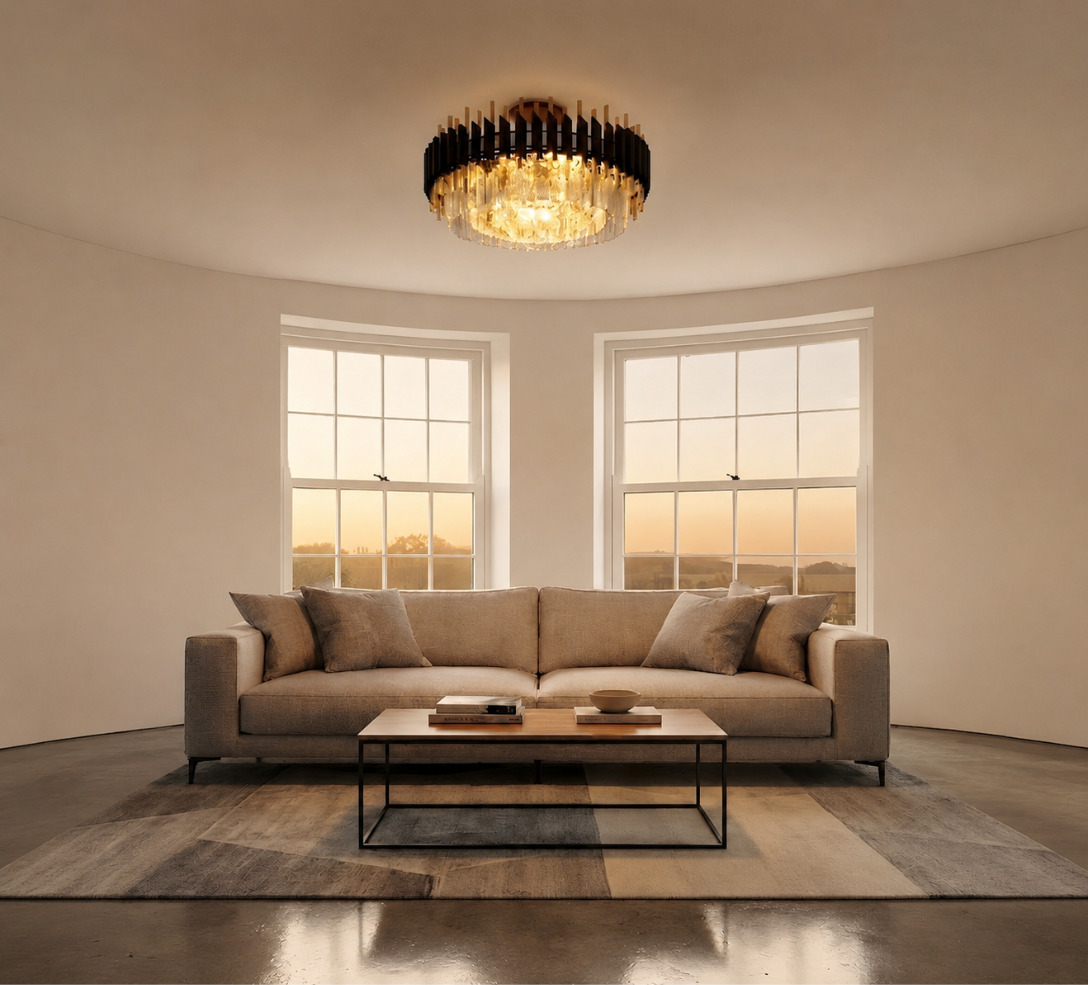
Shape matters as much as finish.
A round chandelier is usually the most flexible option. It can work in living rooms, bedrooms, hallways and stairwells because it creates a central focal point. Round or tiered chandeliers are especially effective where the room is roughly square or where the fitting hangs in the centre of the space.
A rectangular chandelier is better suited to long or narrow areas. This makes it useful above kitchen islands, dining tables and longer open-plan zones because the fitting follows the line of the surface below.
The mistake is choosing a chandelier shape in isolation. A beautiful rectangular chandelier can look wrong in a compact square room, while a small round chandelier may feel underwhelming over a long kitchen island.
Where customers are using chandeliers most often
Chandeliers are often associated with dining rooms, but that is not the only use case.
| Arrow Room Insight: Arrow customers commonly buy chandeliers for living rooms, kitchen islands and stairwells, although the right choice still depends on the specific project and room layout. |
In a living room, a chandelier usually acts as a central feature. It should work with wall lights, lamps or downlights rather than trying to provide every layer of light on its own.
Over a kitchen island, shape and height matter more. A long island often needs a fitting that follows its length, whether that is a rectangular chandelier, a linear pendant or a group of coordinated lights.
In a stairwell, a chandelier can make use of vertical space that might otherwise feel empty. The key check is drop length. The fitting should be visible and impressive without getting in the way of movement, sightlines or maintenance access.
Practical checks before buying a chandelier
The most useful chandelier buying questions are often practical rather than decorative.
| Customer question | Why it matters |
| How many bulbs does it require? | This affects brightness, replacement costs and the type of bulbs needed |
| Are bulbs included? | Some chandeliers may require suitable bulbs to be ordered separately |
| Is the overall height adjustable? | Important for dining areas, kitchen islands, stairwells and lower ceilings |
| Is the chandelier dimmable? | Useful where the same room needs brighter task light and softer evening light |
| Does it arrive fully assembled? | Some crystal chandeliers may need parts attached before or during installation |
These details affect installation, running costs and everyday use, so they are worth checking before choosing a product. For safety and finish quality, chandeliers should be installed by a qualified electrician, especially where the fitting is large, heavy, multi-lamp or installed in a high ceiling or stairwell.
Crystal chandelier examples worth comparing
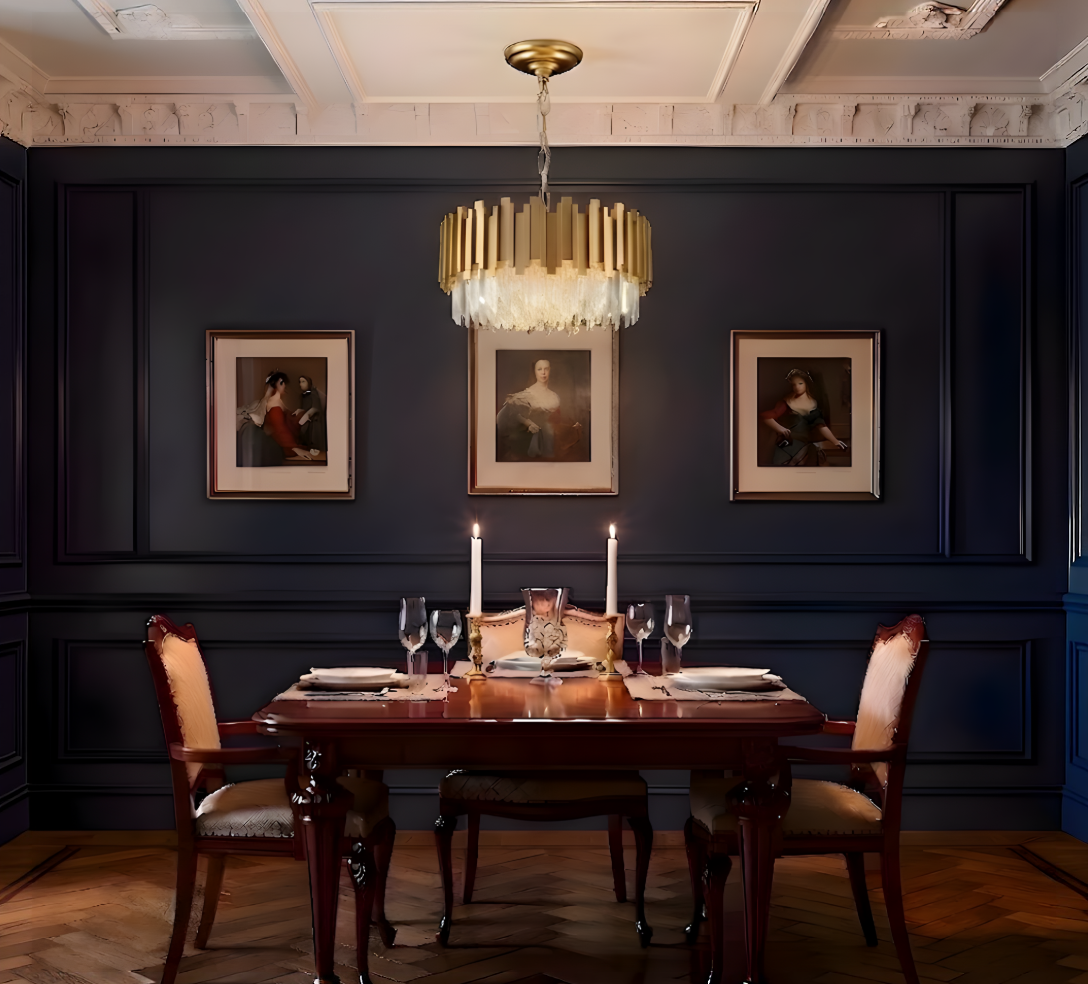
Once you know the room, ceiling height and preferred finish, it helps to compare a few chandelier types rather than browsing every option at once.
For a warm statement finish, the Matt Gold 8 Lamps Crystal Dining Area Chandelier is a useful example of a decorative crystal chandelier with a strong gold-tone presence for living rooms, entranceways or dining areas.
And for a more contemporary look, the Luxury Crystal Flush Light Black with Polished Brass Accents shows how black and brass detailing can give crystal lighting a more modern edge while keeping the profile more contained.
If the aim is to add a gold finish without choosing a very deep fitting, the Crystal Pendant Mount Chandelier in French Gold 8 Lamps is worth comparing because it gives the room decorative impact while keeping the drop shorter.
For larger rooms or spaces where the chandelier needs to work harder as a focal point, the Crystal Round Chandelier Black with Brushed Brass Accents gives a stronger statement look for rooms with the scale, ceiling height and layout to support a more dramatic piece.
Common chandelier mistakes to avoid
The biggest mistake is choosing a chandelier only because it looks impressive. A statement chandelier still needs to suit the room.
Avoid choosing a fitting that is too small for the space. Small chandeliers can look lost in larger living rooms or stairwells, even if the design itself is attractive.
Also, avoid choosing a fitting that hangs too low. This is especially important above kitchen islands, walkways and staircases, where clearance affects comfort and safety.
Do not ignore the rest of the lighting scheme. A chandelier can be the main feature, but it should usually work alongside other light sources such as wall lights, lamps, downlights or cabinet lighting.
Common Questions Before Choosing a Chandelier
These questions cover the practical details customers often need to check before choosing a chandelier.
Are crystal chandeliers only suitable for traditional homes?
No. Crystal chandeliers can work in traditional, transitional and contemporary interiors. The frame, finish and shape usually decide whether the chandelier feels classic, modern or somewhere between the two.
When should I choose a rectangular chandelier?
A rectangular chandelier is usually best for long surfaces or long rooms, such as kitchen islands, dining tables or open-plan spaces. The shape helps the fitting follow the layout rather than fighting against it.
Are chandeliers usually dimmable?
Some are, but it depends on the fitting, bulb type and dimmer switch. Check the product information before buying if dimming is important.
Do chandeliers arrive fully assembled?
Not always. Some crystal chandeliers may require assembly, especially designs with decorative drops or multiple components. Check this before ordering so installation does not become more complicated than expected.
Choose the chandelier around the room, not just the fitting
The best chandelier is not always the biggest or most decorative option. It is the one that suits the room’s scale, ceiling height, finish scheme and daily use. When the shape, finish, bulb requirements, adjustable height and installation details all line up, a chandelier becomes a lighting feature that feels considered, useful and properly connected to the rest of the home.
Recent Posts
-
What Bulbs Do Chandeliers Use? E14, Lumens, Colour Temperature and Dimming Explained
Choosing a chandelier is only part of the decision. The bulbs still need to fit properly, provide t …3rd Oct 2026 -
Rocker, Intermediate, Fan Isolator and Cooker Switches Explained: What Does Each One Do?
Electrical switches can look very similar on the wall while doing very different jobs. Much of the …22nd Sep 2026 -
How Many Downlights Do You Need? Plan the Layout Before You Install
Downlights are often arranged on a ceiling before anyone has asked the most important question: what …10th Sep 2026