
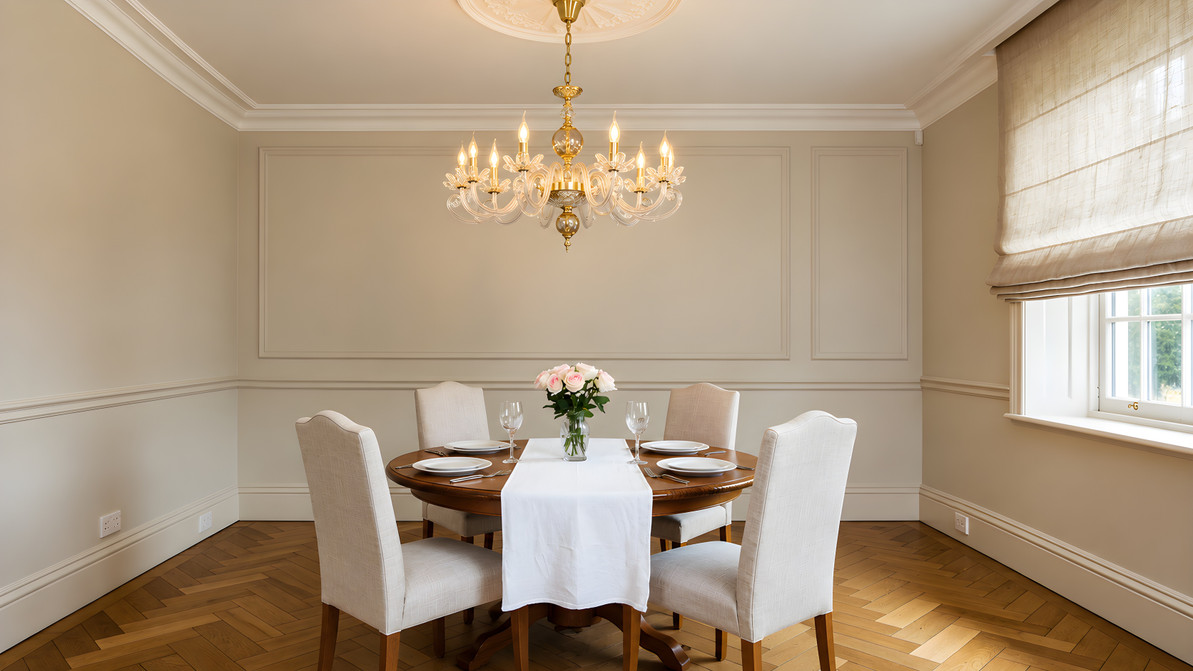
What Bulbs Do Chandeliers Use? E14, Lumens, Colour Temperature and Dimming Explained
Choosing a chandelier is only part of the decision. The bulbs still need to fit properly, provide the right amount and colour of light and, if you want to dim them, work with the lighting control.
That matters particularly with multi-lamp chandeliers, where the same bulb choice may be repeated six, eight or more times. The cap is therefore only the starting point: physical size, lumen output, colour temperature and dimming compatibility can all affect the finished result.
Key Points
- Across Arrow Electricals’ chandelier range, E14 is the most common lamp cap, while a smaller number of fittings use G9. Always check the individual chandelier specification.
- Confusing LED wattage with brightness is a recurring customer issue. Lumens are the useful figure for comparing light output.
- Matching the cap does not guarantee that a bulb will physically suit the fitting. Height, diameter and shape can also matter.
- Warm white is the colour-temperature choice most commonly seen among Arrow Electricals chandelier customers, while clear decorative bulbs are also commonly chosen.
- Some apparent bulb or chandelier faults turn out to involve the lamp and dimmer combination rather than a failure of the chandelier itself.
Quick answer: what bulbs do chandeliers use?
There is no single bulb used by every chandelier. Many traditional, candle-style and crystal chandeliers use E14 or SES bulbs, while some contemporary fittings use compact G9 lamps.
E14 is a Small Edison Screw format with a 14mm cap. G9 lamps use two looped pins rather than a screw cap. Other lamp formats also exist, so the specification for the individual chandelier should always take priority.
| Bulb format | How to recognise it | Common chandelier use |
| E14 / SES | Small 14mm screw cap | Many candle-style, traditional and crystal chandeliers |
| G9 | Compact lamp with two looped pins | Some contemporary and compact multi-lamp chandeliers |
If you are still deciding on the fitting itself rather than its lamps, the guide to choosing a chandelier by room, ceiling height and drop covers that earlier stage of the decision.
The five checks before buying chandelier bulbs
A bulb can have the correct cap and still be a poor match for the chandelier. Checking five things together reduces the risk of choosing a lamp that fits the holder but performs or looks differently from what you expected.
The useful sequence is cap, physical fit, brightness, appearance and dimming compatibility.
| Check | What to confirm |
| Cap | Does the chandelier require E14, G9 or another lamp type? |
| Physical fit | Will the bulb’s height, diameter and shape fit comfortably? |
| Brightness | How many lumens does each lamp produce, and how many lamps does the chandelier use? |
| Appearance | What colour temperature, glass style and bulb shape suit the effect you want? |
| Dimming | Is the lamp dimmable, and is it suitable for the dimmer controlling the chandelier? |
E14 vs G9: check the cap and bulb size first
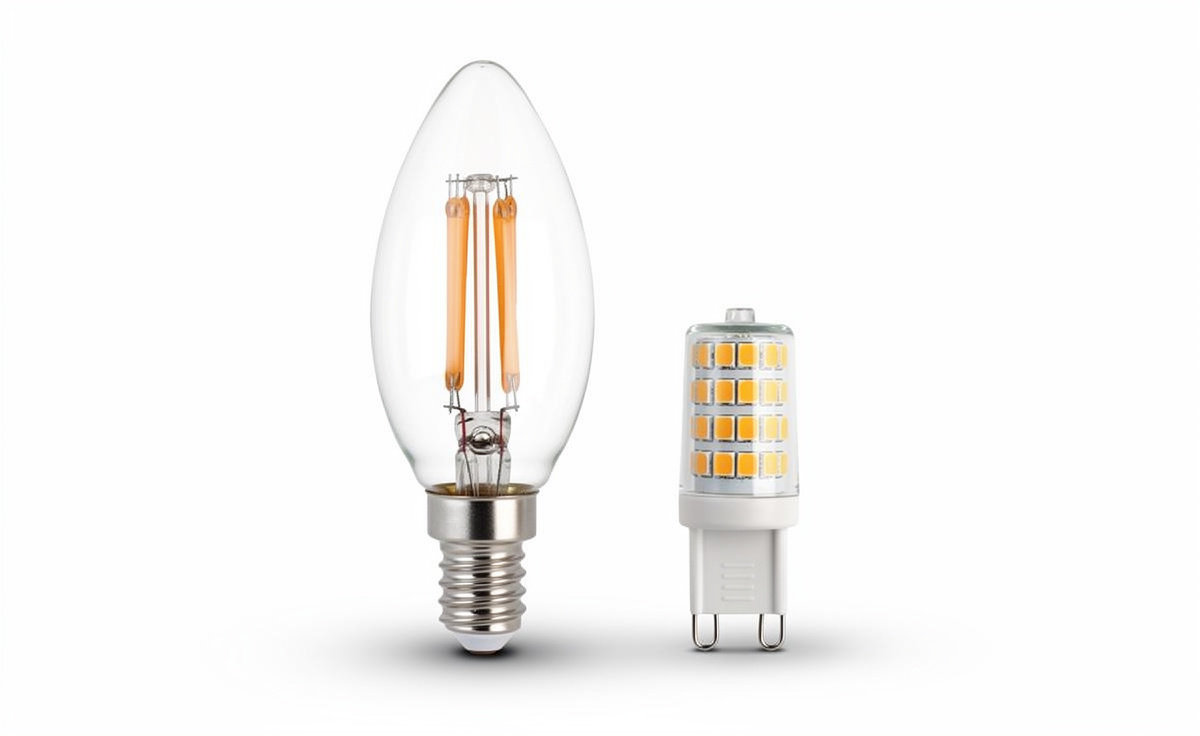
E14 and G9 are different lamp formats and are not interchangeable. Identify the required cap from the chandelier specification or the existing lamp before comparing brightness, colour or decorative style.
Physical dimensions are the next check. Two lamps can share the same E14 cap while differing in height, diameter and overall shape.
What is an E14 chandelier bulb?
E14 is also known as SES, or Small Edison Screw. Its screw cap measures 14mm across and the format is widely used in smaller decorative fittings, including many chandeliers.
Arrow Electricals’ E14 range includes decorative and candle-style options. When a chandelier specifies this format, compare E14 bulbs by dimensions, lumen output, colour temperature and whether dimming is required.
What is a G9 chandelier bulb?
G9 is a compact lamp format that uses two looped pins rather than a screw cap. It is used in some contemporary chandeliers and other decorative fittings.
G9 LEDs are available with different outputs, colour temperatures and dimming characteristics. If the chandelier specifies this format, compare G9 bulbs against the requirements of the fitting.
Why bulb dimensions matter
Matching E14 to E14 does not mean every lamp has the same dimensions.
Candle, tubular and decorative flame-style lamps can vary in height and diameter. On chandeliers with close-set crystal, glass or shades, those differences can affect whether the bulb fits comfortably and whether its proportions suit the fitting.
Checking the listed dimensions before purchase is particularly useful when replacing an unusual decorative lamp.
Lumens vs watts: how bright should chandelier bulbs be?
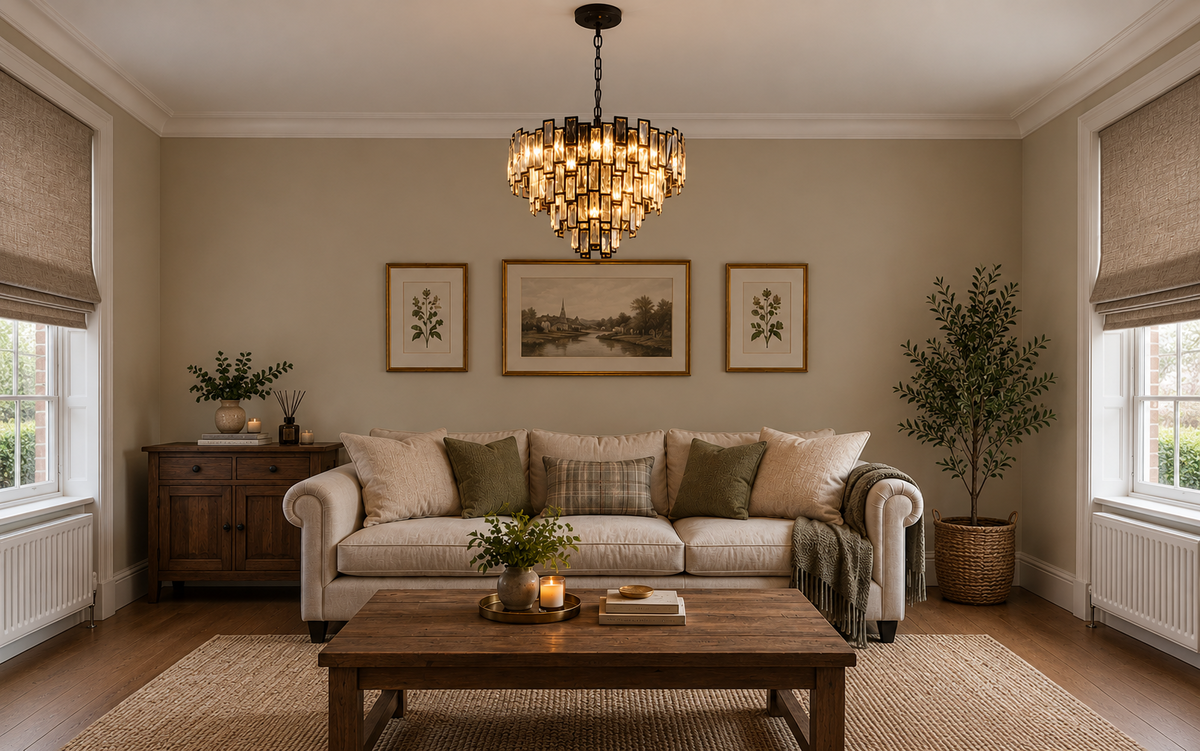
With modern LED lamps, lumens describe light output, while watts describe electrical power consumption. Treating LED wattage as a simple brightness scale can therefore lead to the wrong comparison.
This is a recurring source of confusion among Arrow Electricals customers, especially when replacing older lamp types with LEDs.
A chandelier adds another consideration because several lamps contribute to the overall light output. A six-lamp fitting and a twelve-lamp fitting can produce very different results even if they use the same individual lamp.
The combined lumen figures can help you compare potential output, but they do not tell the whole story. Crystal, shades, the direction in which the light is distributed, room size and other light sources all influence how bright the space ultimately feels.
Consider the lumen output of each lamp, the number of lamps in the chandelier and the role of the fitting in the room. A chandelier used as the main source of light may need a different approach from one used mainly for atmosphere alongside wall lights, downlights or lamps.
Always check any maximum lamp rating stated by the chandelier manufacturer as well. That rating is separate from brightness and should not be exceeded.
Colour temperature and bulb appearance
Once the cap, physical fit and brightness are right, colour temperature and visible bulb style shape much of the final appearance. These are preference-led choices rather than fixed technical rules.
Think about the atmosphere you want and how the chandelier will sit alongside the other light sources visible in the room.
Warm white or cool white?
Warm white is the colour-temperature choice most commonly seen among Arrow Electricals chandelier customers.
Around 2700K gives a warm, soft appearance. Around 3000K remains warm but is slightly cleaner in appearance, while around 4000K produces a cooler, crisper white.
| Colour temperature | General effect | Useful starting point |
| Around 2700K | Warm and soft | Traditional or crystal chandeliers and relaxed living areas |
| Around 3000K | Warm but slightly cleaner | Contemporary residential chandeliers |
| Around 4000K | Cooler and crisper | Where a cleaner white appearance is preferred |
Where several light sources are visible in the same room, keeping their colour temperatures reasonably consistent can help the overall scheme feel more coherent.
Clear, frosted or decorative-shaped bulbs?
Bulb appearance matters most when the lamp is clearly visible as part of the chandelier.
Arrow Electricals mainly stocks clear-style chandelier lamps, and these are commonly chosen for decorative fittings. Frosted or opal lamps create a softer-looking visible light source, while candle and flame shapes offer a more decorative profile.
Appearance should come after the practical checks. The bulb still needs to meet the required cap, dimensions, brightness and dimming requirements.
Dimmable chandelier bulbs: what needs to match?
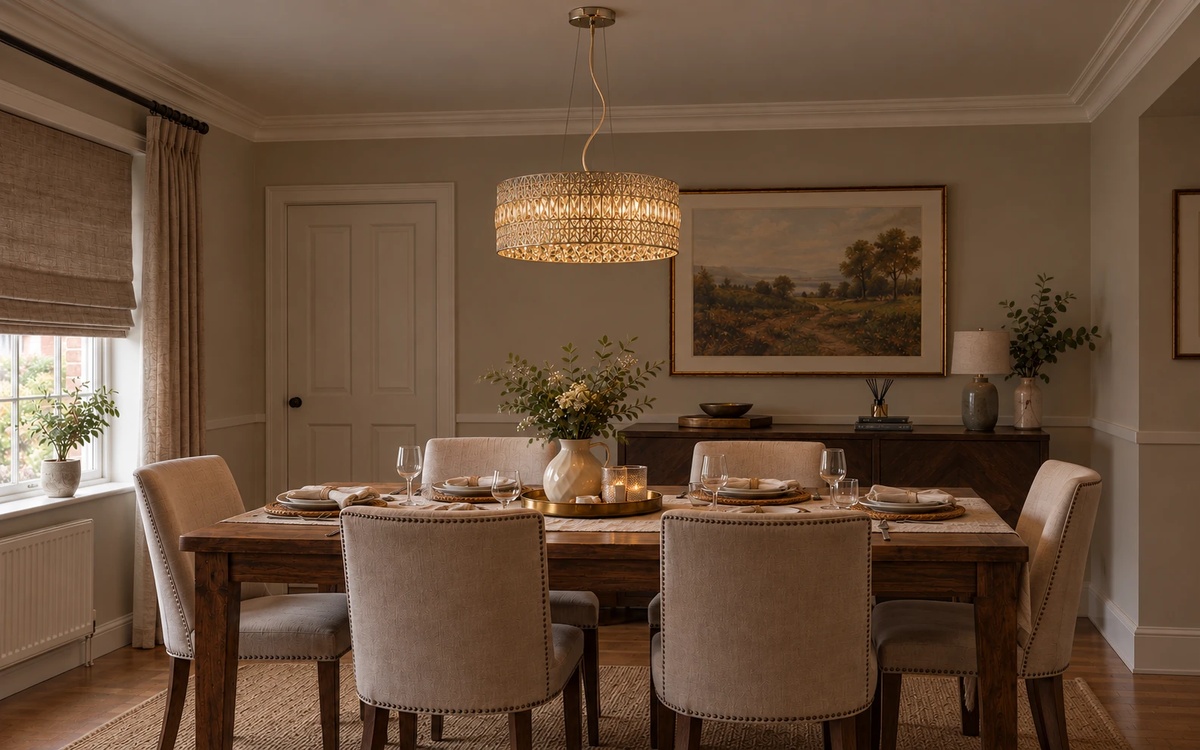
A bulb marked “dimmable” is only one part of the compatibility check. The dimmer also needs to be suitable for LED lighting, and the lamps and total connected load need to fall within the manufacturer’s guidance for that control.
Staying within a stated wattage range does not automatically guarantee ideal dimming behaviour. LED lamps and dimmers can interact differently depending on the products being used.
This is one reason some customer enquiries initially appear to concern a faulty chandelier or faulty bulbs when the real issue is the lamp and dimmer combination.
Multi-lamp chandeliers deserve particular attention because one dimmer may be controlling several LED lamps at the same time. Different dimmer modules are designed for different LED loads, so the correct control should be selected for the installation rather than assuming that any LED dimmer will suit any chandelier.
Once the lighting requirements are known, relevant LED dimmer modules can be compared against the manufacturer’s specifications.
For installation or persistent compatibility problems, use a competent electrician rather than altering wiring or control settings without the appropriate instructions.
When chandelier bulbs seem faulty
Flickering, poor dimming or changed behaviour after replacing lamps does not automatically mean the chandelier has failed. Compatibility is a sensible first thing to check, particularly when the problem appeared after changing the bulbs or lighting control.
These are starter checks to identify what information to review rather than electrical repair instructions.
| What you notice | What to check first |
| One or more lamps do not illuminate | Confirm the correct cap and that the lamps are fitted properly |
| Lamps flicker when dimmed | Check that the lamps are dimmable and suitable for the LED dimmer |
| The chandelier does not dim smoothly | Check the dimmer specification and connected LED load |
| Lamps take a moment to respond | Check the lamp and dimmer guidance before assuming there is a fault |
| Behaviour changed after replacing the bulbs | Compare the new lamps’ specifications and dimming characteristics with the previous lamps |
Some LED and dimmer combinations can take a moment to illuminate. A brief delay does not therefore automatically mean that the chandelier or lamps have failed.
If flickering, poor dimming or unusual switching persists, check the lamp and dimmer manufacturer’s guidance or ask a competent electrician to inspect the installation.
Chandelier bulb FAQs
These questions cover some of the final checks that commonly arise when choosing or replacing chandelier lamps. The specification for the individual fitting should always take priority where its requirements differ.
Are E14 bulbs commonly used in chandeliers?
Yes. E14 or SES is widely used in decorative chandeliers and is the most common lamp format across Arrow Electricals’ chandelier range. Some fittings use G9 or other formats, so check the specification before buying replacements.
Can I replace chandelier bulbs with LED bulbs?
Usually, where a suitable LED replacement matches the required cap, physical dimensions and fitting specification. If the chandelier is dimmed, the replacement LED must also be dimmable and suitable for the control being used.
How many lumens should a chandelier bulb have?
There is no universal figure. Consider the lumen output per lamp, the number of lamps in the chandelier and whether the fitting provides the room’s main light or forms part of a wider lighting scheme.
What colour temperature is best for a chandelier?
Warm white is the most common choice among Arrow Electricals chandelier customers. Around 2700K gives a warmer appearance, while 3000K remains warm but slightly cleaner. Around 4000K gives a cooler effect where that is preferred.
Why do LED chandelier bulbs flicker or take a moment to come on?
The most common cause is a mismatch between the lamp and the dimmer — either the lamp is not rated as dimmable, or the dimmer is not designed for LED loads. It is also worth checking that the total connected load falls within the dimmer’s minimum and maximum range. Persistent problems should be checked against the manufacturer’s guidance or by a competent electrician.
Choose chandelier bulbs with confidence
Start with the chandelier specification and confirm the cap and physical dimensions before comparing lumen output, colour temperature and appearance. If dimming is involved, treat the lamps and dimmer as parts of the same lighting system rather than separate decisions.
That approach avoids relying on wattage, appearance or cap type alone. Once the specification is clear, browse Arrow Electricals chandelier lamp range to compare options by cap, output and finish.
Recent Posts
-
What Bulbs Do Chandeliers Use? E14, Lumens, Colour Temperature and Dimming Explained
Choosing a chandelier is only part of the decision. The bulbs still need to fit properly, provide t …3rd Oct 2026 -
Rocker, Intermediate, Fan Isolator and Cooker Switches Explained: What Does Each One Do?
Electrical switches can look very similar on the wall while doing very different jobs. Much of the …22nd Sep 2026 -
How Many Downlights Do You Need? Plan the Layout Before You Install
Downlights are often arranged on a ceiling before anyone has asked the most important question: what …10th Sep 2026