
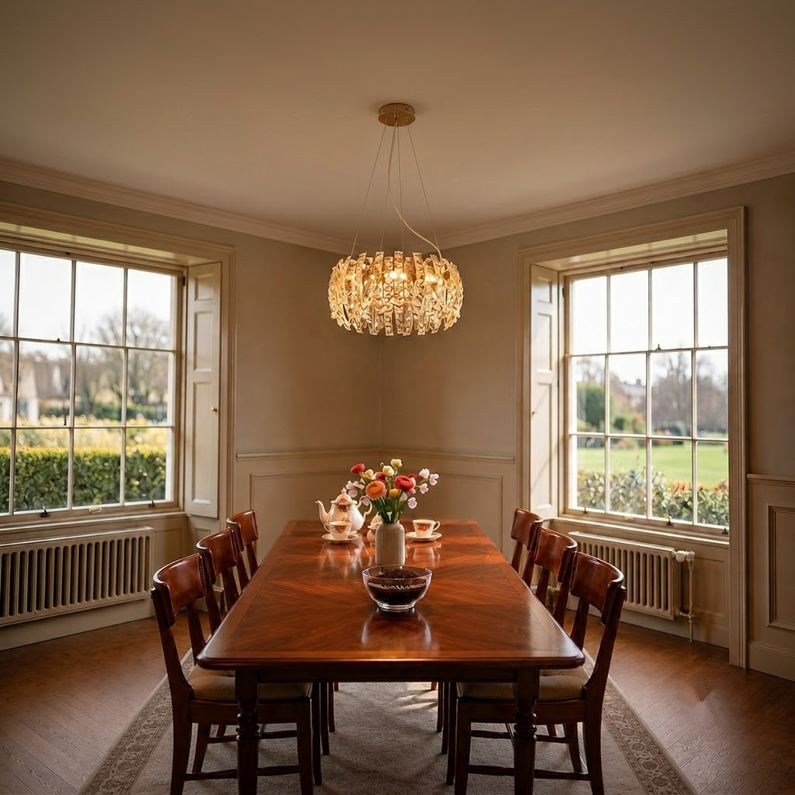
How to Choose a Chandelier by Room, Ceiling Height and Drop
A chandelier can transform a room, but the design is only one part of the decision. Its width, total height, drop length and position will determine whether it feels properly balanced or looks too large, too small or too low for the space.
At Arrow Electricals, we recommend starting with the room rather than the style. A chandelier for living room seating needs different proportions from a chandelier for dining room use. A stairwell can often take a longer drop, while a bedroom or lower ceiling may need a shallower, close-to-ceiling fitting.
This guide explains what to measure, how ceiling height affects the choice and which types of chandeliers suit living rooms, dining rooms, bedrooms, hallways and stairwells. Once those practical decisions are clear, it becomes much easier to choose between crystal, gold, black, fabric-shade and other decorative styles.
Quick answer: Which chandelier suits each room?
The right chandelier should feel in proportion to both the room and the furniture beneath it. Where the fitting will hang is often as important as the overall room size.
| Room or position | Chandelier to consider | Main checks |
| Living room | Crystal, black, gold or statement chandelier | Width, seating layout, headroom and ceiling height |
| Above a dining table | Crystal, gold, round or elongated chandelier | Table width, hanging height, bulb count and dimmability |
| Bedroom | Mini chandelier, flush chandelier or fabric-shade design | Room scale, brightness, bed position and headroom |
| Hallway | Flush, compact statement or tiered chandelier | Walking clearance, doors and sightlines |
| Stairwell | Large chandelier, tiered chandelier or long-drop fitting | Vertical space, viewing angles and maintenance access |
| Low ceiling | Flush or semi-flush chandelier | Full fitting depth and clearance beneath it |
| High ceiling | Large, tiered or height-adjustable chandelier | Overall drop, scale and visual balance |
You can browse our wider chandelier range to compare dimensions, fitting types and styles.
Start with ceiling height before choosing the style
Ceiling height affects how much of a drop the room can comfortably take.
For lower ceilings, a flush or semi-flush chandelier is generally the most practical option. These fittings retain the decorative detail associated with a chandelier without hanging far into the room. For instance, our Luxury Crystal Flush Light Black with Polished Brass Accents offers chandelier-style detail in a design that sits closer to the ceiling.
With a standard ceiling, check the chandelier’s full height carefully. A modest fixed drop may work, but a height-adjustable fitting gives more control during installation. A height-adjustable option such as our 6-Light Dimmable Bronze Crystal Chandelier gives more control over the final position.
High ceilings, entrance halls and stairwells can usually accommodate a longer or more substantial fitting. The chandelier needs enough scale to remain visible within the vertical space, but it should not interrupt walkways, doors or important sightlines.
What to measure before choosing the chandelier size
Product photographs can make a chandelier appear larger or smaller than it really is. Before ordering, record the measurements that will affect how it sits in the room.
| What to measure | Why it matters |
| Room width and length | Helps you judge whether the fitting has enough presence without overwhelming the space |
| Ceiling height | Determines how much overall drop and depth the room can take |
| Chandelier width | Shows how much horizontal space the fitting will occupy |
| Minimum and maximum drop | Confirms whether the chandelier can sit at the required height |
| Furniture beneath it | A table, bed, island or seating area changes the available clearance |
| Walking routes | Ensures people can pass beneath or beside the fitting comfortably |
| Doors and tall furniture | Prevents the chandelier from obstructing doors, wardrobes or cabinets |
| Stairwell sightlines | Helps the fitting look balanced from the upper and lower floors |
Check whether the stated product height includes the chain, cable, ceiling rose and lowest decorative element. The overall drop shown in a specification may not always be the same as the decorative body height.
For a chandelier above a dining table, a sensible guide is a fitting around half to two-thirds of the table width. A gap of approximately 75–90cm between the tabletop and the lowest part of the chandelier is also commonly used with standard-height ceilings, although the final position should reflect the fitting, table, ceiling height and sightlines.
Where people will walk directly beneath the chandelier, around 2.1 metres of clearance from the floor to its lowest point is a useful starting point, where the ceiling allows. The final height should also account for the room, the fitting and the people using the space.
Choosing a chandelier for a living room
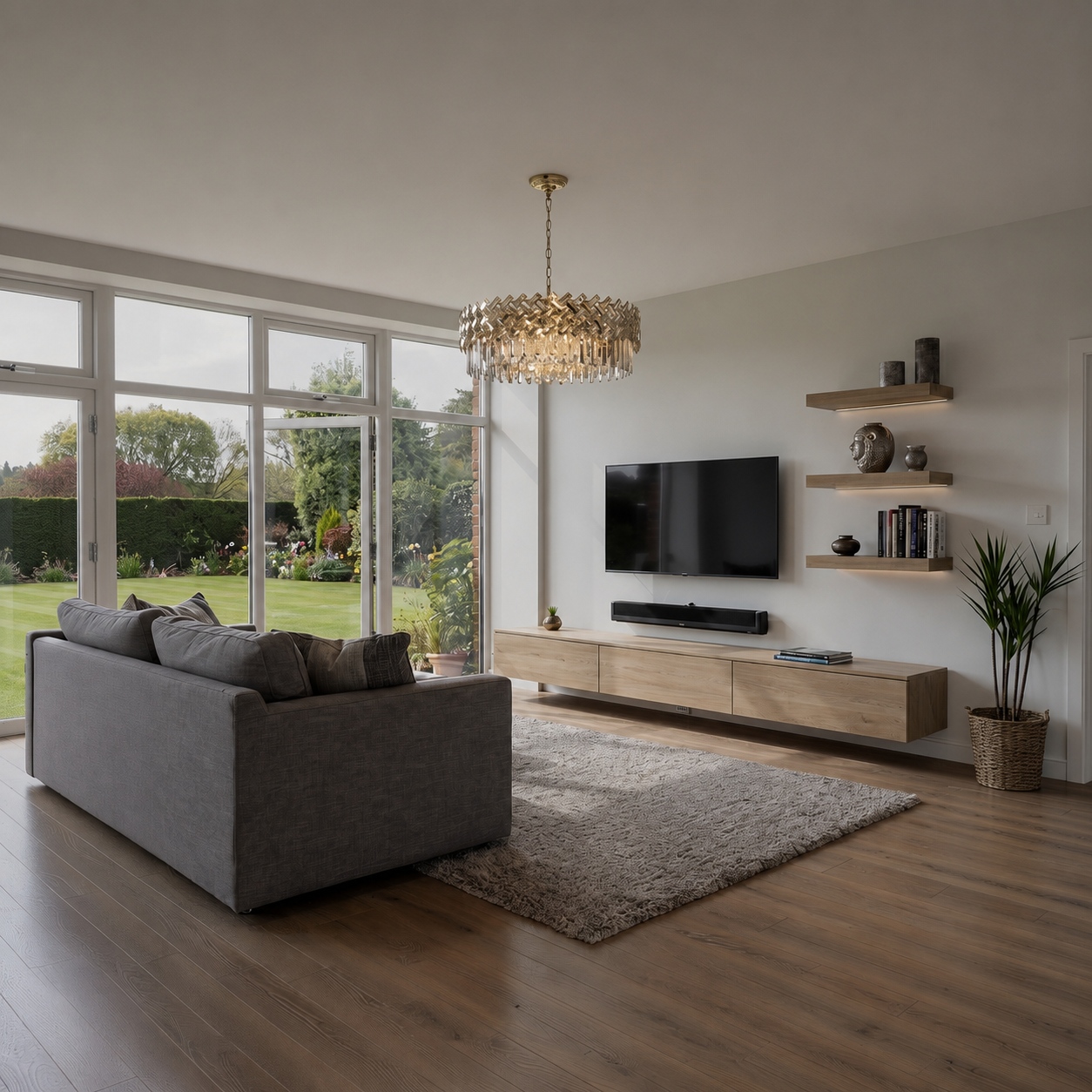
In a living room, the chandelier should relate to the seating layout and the way people move through the room.
If the fitting hangs over a coffee table or defined seating group, it may be possible to use a more noticeable drop because people are less likely to walk directly beneath it. If it sits in an open route through the room, headroom becomes more important.
In a smaller living room, a compact chandelier or a shallower design will usually feel more balanced than a wide, multi-tiered fitting. Larger lounges and rooms with higher ceilings can accommodate more width, more bulbs or a stronger statement design.
Also consider the other light sources. A chandelier does not have to provide all the room’s light by itself. Wall lights, lamps and accent lighting can share that work, allowing the chandelier to function as both a practical fitting and a focal point.
Choosing a chandelier for a dining room
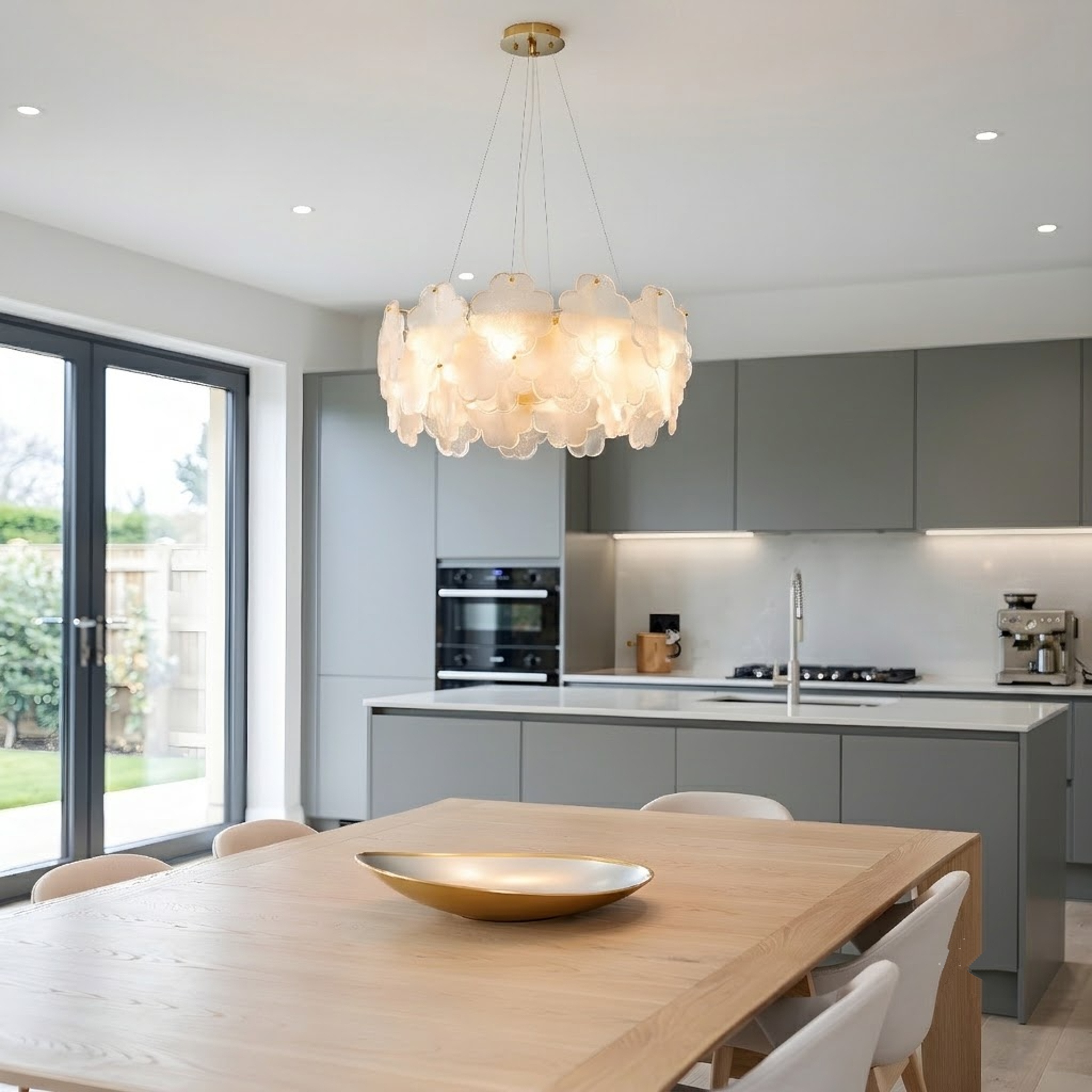
In a dining room, the chandelier is normally positioned in relation to the table rather than centred within the entire room.
Start by measuring the table width and length. A round chandelier often sits naturally above a round or square table, while a longer table may suit a broader fitting, a rectangular chandelier or more than one pendant-style light.
The chandelier should hang low enough to feel connected to the table but high enough not to block conversation, views or centrepieces. With a fitting such as our Matt Gold 8 Lamps Crystal Dining Area Chandelier, compare the width, bulb count and drop with the table and surrounding space.
Dimmability is especially useful in this setting. You may want brighter light for practical use, while a softer level can create a more comfortable atmosphere during meals.
Choosing a chandelier for a bedroom
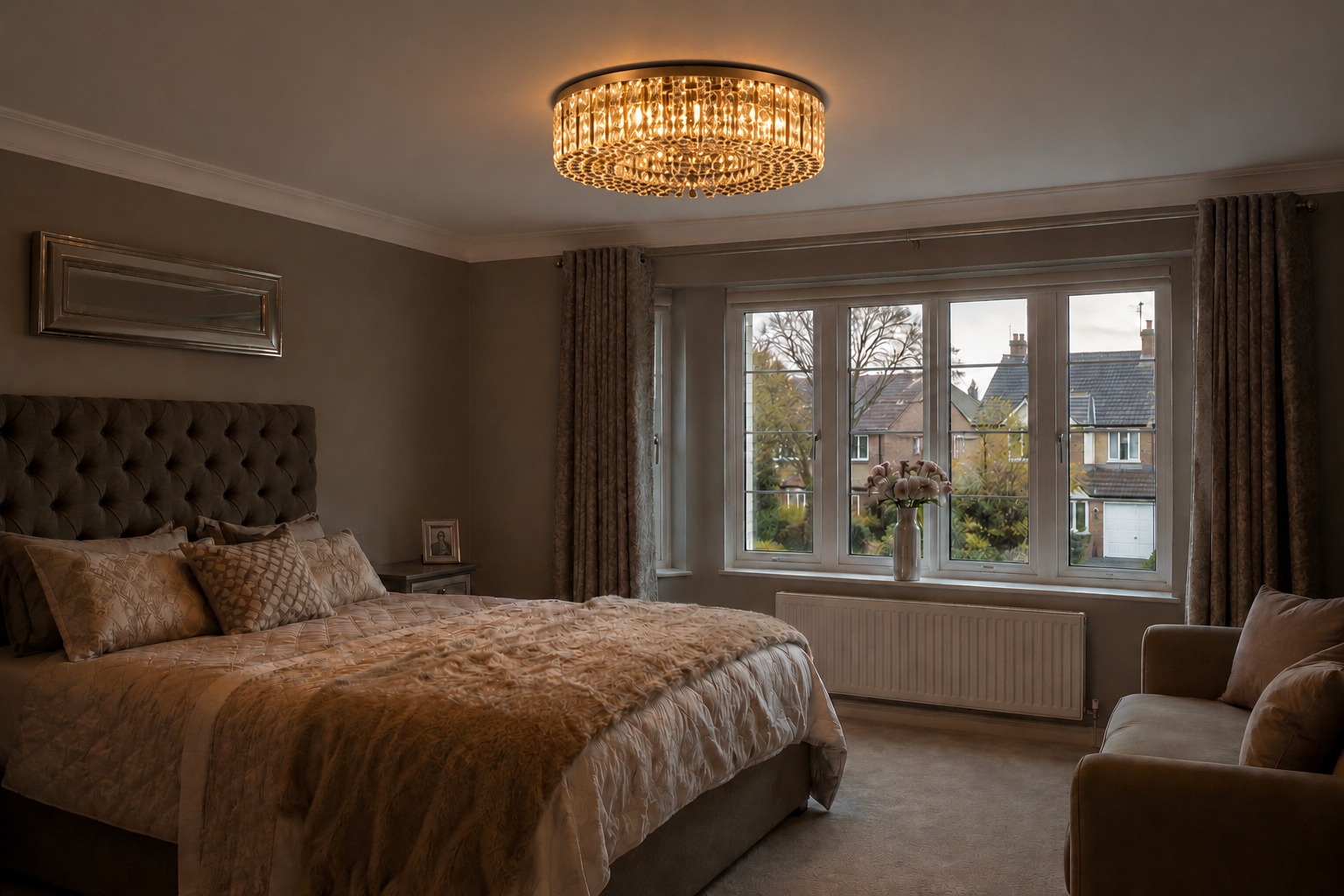
A bedroom chandelier should feel proportionate and comfortable when viewed from the bed.
A mini chandelier, low-profile design or compact crystal fitting may be sufficient for a standard bedroom. Larger fittings can work in spacious rooms with higher ceilings, but they should not dominate the bed or make the ceiling feel lower.
Placement also matters. Check the bed position, wardrobe doors and the routes around the room. Where possible, the chandelier should relate to the room as a whole rather than being placed so low above the bed that it feels intrusive.
For a more compact statement fitting, our Modern and Elegant Crystal Chandelier in Gold Finish, 6 Lamps, offers decorative impact without the scale of a larger multi-tiered design. Its suitability will still depend on the bedroom dimensions, ceiling height, placement and required light level.
Choosing a chandelier for a hallway or stairwell
Hallways and stairwells often provide the vertical space needed for more dramatic lighting, but the measurements need particular care.
In an entrance hall, check the front door, internal doors and the main walking route. The chandelier should be visible without hanging where it obstructs movement.
In a stairwell, measure from the ceiling to the lowest point the chandelier can safely reach. It should look balanced from both floors and should not interfere with the stairs, landing or bannister.
A tiered chandelier can work well because its shape follows the height of the space. Our Art Deco Golden Tiered Crystal Chandelier uses a layered design to create a strong vertical focal point. Its adjustable drop provides greater flexibility in an entrance hall or stairwell, although the available clearance and future maintenance access still need careful consideration.
Access is another practical issue. Think about how the fitting will be installed, cleaned and maintained after it is in place, particularly above a stairwell.
Match the style after the proportions are right
After confirming the dimensions and placement, you can turn to the decorative details.
A crystal chandelier can suit both classic and modern rooms, depending on its shape and metalwork. Anyone searching for a crystal chandelier UK range should compare the fitting dimensions and drop as carefully as the crystal design itself.
A gold chandelier can add warmth and link with brass handles, mirrors or other warm-metal details. Black chandeliers create a stronger contrast and can work well with dark furniture, black frames or contemporary interiors. Our Crystal Round Chandelier Black with Brushed Brass Accents combines darker metalwork with warmer detailing.
Fabric-shade designs tend to produce a softer effect, while ornate or floral chandeliers can suit more traditional rooms. Whatever the style, it should follow the room’s proportions rather than determining them.
Practical checks before buying a chandelier
Confirm the full width, body height and minimum and maximum drop shown in the product specification. Do not rely on the product image alone.
Bulb count is important, but it does not determine brightness on its own. Review the permitted bulb type and wattage, the expected lumen output and whether the shades or crystals affect how the light is distributed.
Find out whether the chandelier is dimmable and whether the bulbs and dimmer control are compatible. Also confirm whether bulbs are included.
Some chandeliers arrive partly assembled, so review the assembly requirements as well as the product weight. Crystal drops, shades or decorative arms may need to be attached during installation.
Any hardwired chandelier should be installed safely and in line with the relevant UK electrical and building requirements. We recommend using a registered electrician for the installation.
Common mistakes when choosing a chandelier
A chandelier needs to work with the room physically as well as visually. Avoiding these common mistakes can prevent problems with scale, clearance and installation.
The first mistake is choosing the style before checking the measurements. A fitting can look perfect online but prove too wide, too low or too shallow once it reaches the room.
The second is looking only at ceiling height and overlooking the furniture below. A chandelier above a table can hang lower than one positioned over an open walkway.
The third is checking the decorative body but not the complete drop, including the chain, cable, rose and lowest crystal or ornament.
The fourth is choosing too many bulbs for a small room without considering brightness or dimmability.
The fifth is forgetting future access. A large chandelier in a stairwell may look impressive, but it will still need cleaning, bulb changes and occasional maintenance.
Common Questions Before Choosing a Chandelier
These questions cover the measurements and placement decisions buyers commonly need to make before ordering.
How low should a chandelier hang above a dining table?
A common guide is approximately 75–90cm between the tabletop and the lowest part of the chandelier in a room with a standard ceiling. Adjust the position for the ceiling height, fitting size and sightlines across the table.
How much clearance is needed beneath a chandelier?
Where people walk underneath the fitting, approximately 2.1 metres of clearance is a useful starting point, where the room allows. A chandelier above a table can sit lower because it is not positioned within a normal walking route
What size chandelier do I need for a dining table?
As an initial guide, look for a chandelier roughly half to two-thirds of the table width. The table shape, fitting design and visual weight may justify adjusting that proportion.
What size chandelier do I need for a living room?
Measure the room, ceiling height and furniture arrangement rather than using room size alone. A chandelier over a seating group can have different proportions from one hanging in an open walkway.
Can I use a chandelier in a bedroom?
Yes. A mini chandelier, flush chandelier or fabric-shade fitting can work particularly well in a bedroom. Check the ceiling height, bed position, wardrobe clearance and brightness before choosing.
Is a flush chandelier better for a low ceiling?
A flush or semi-flush chandelier is usually the more practical option where ceiling height is limited. It creates a decorative effect without the longer drop of a traditional chandelier.
Choose the measurements before the style
The most successful chandelier choices begin with the room rather than the product image.
Measure the ceiling height, available drop, fitting width, furniture and walking routes first. For a dining room, use the table as the main reference point. For a living room or bedroom, consider the furniture layout and where people will move. For a hallway or stairwell, give particular attention to clearance, viewing angles and maintenance access.
With those practical details confirmed, you can choose the design with greater confidence. Whether you choose a crystal chandelier, gold chandelier, black chandelier, flush chandelier, tiered chandelier, mini chandelier or large chandelier, it will look more considered when its proportions suit the room.
Recent Posts
-
Rocker, Intermediate, Fan Isolator and Cooker Switches Explained: What Does Each One Do?
Electrical switches can look very similar on the wall while doing very different jobs. Much of the …22nd Sep 2026 -
How Many Downlights Do You Need? Plan the Layout Before You Install
Downlights are often arranged on a ceiling before anyone has asked the most important question: what …10th Sep 2026 -

Door Locks and Latches Explained: Which Type Does Your Door Need?
Choosing a door handle is usually straightforward because you can see the style, shape and finish. …28th Aug 2026