
How to Clean a Chandelier: The Complete Guide to Crystal and Glass Fittings
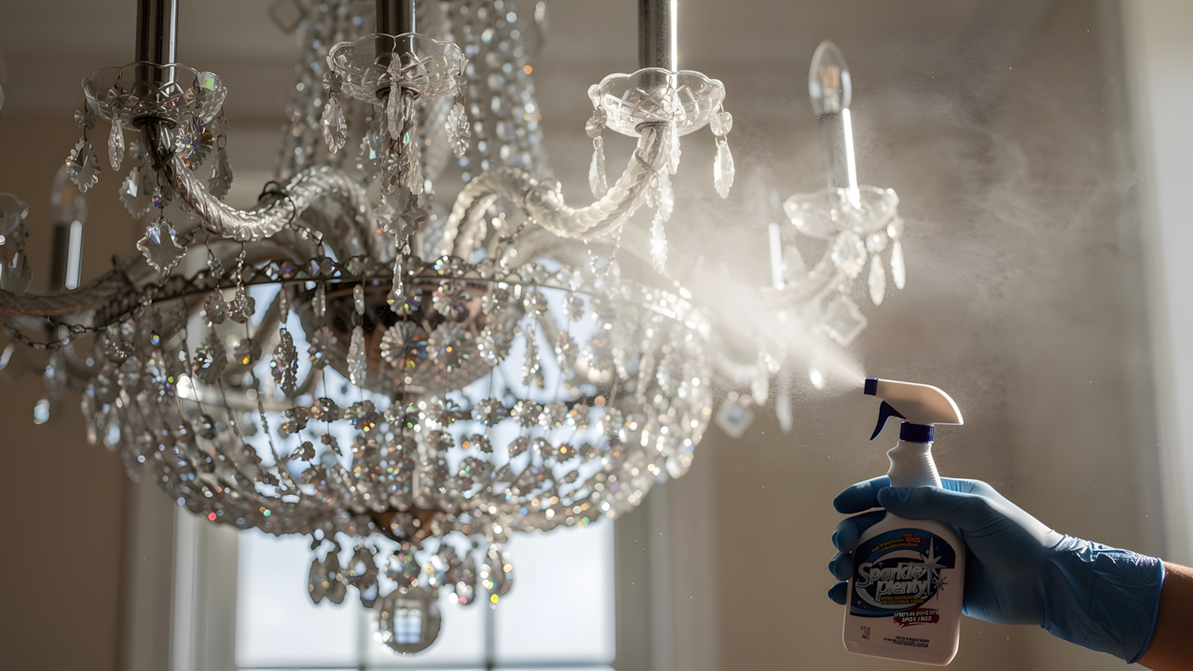
A chandelier that is not cleaned regularly loses its sparkle — and more besides. Dust, grease, and everyday airborne dirt settle across every surface, cutting light output and wearing down the fixture over time. This guide walks you through what to use — including how to get the best results from a dedicated chandelier cleaning spray — how to clean safely, and how often to do it.
Why Cleaning Your Chandelier Matters
A neglected chandelier does more than look dull. Dust and grime on crystal and glass stop light from bouncing correctly through the material, which can reduce room brightness by up to 25%. Many homeowners respond by switching to higher wattage bulbs — which costs more and does not fix the real problem.
Dust also traps moisture from the air. Over time, metal frames on some chandeliers may start to corrode, brass finishes to tarnish, and glass surfaces to cloud over. On chandeliers where crystals hang from thin pins or wires, built-up grime weakens the fixing points and can cause drops to fall.
There is a fire risk too. Heavy dust sitting near hot bulb sockets or older wiring is flammable. Cleaning regularly also lets you check the fixture properly — spotting loose crystals, frayed cables, or weak fixings before they become a bigger problem.
Safety first: Always turn the power off at the wall or circuit breaker and let bulbs cool for at least 20 minutes before touching the fixture. Never handle lamp holders or live cables with wet hands or a damp cloth — moisture near any electrical part is a shock risk.
What You Need to Clean a Chandelier
Using the right cleaner matters. The wrong product can strip metal plating, mark glass, or leave streaks that are harder to shift than the original dirt.
| Cleaner | Type | Best Used For | Key Point |
| Sparkle Plenty Crystal Chandelier Cleaner Spray | Ready-to-use drip-dry spray | Crystal and glass chandeliers | Drip-dry, no-rub, ammonia-free — built for chandeliers |
| Ammonia-free glass cleaner | Pre-mixed spray | Flat glass panels, simple fittings | Needs manual wiping; can streak on crystal |
| Warm water + mild dish soap | Diluted solution | Detached crystals during a deep clean | Rinse with distilled water to avoid water spots |
| Isopropyl alcohol + distilled water | 1 part to 4 parts water | In-place crystal wipe | Apply to cloth only — never spray at the fitting |
What not to use: Bleach, neat vinegar, and ammonia-based cleaners should never touch chandelier frames or crystal fixings. They damage plating, corrode the wires holding crystal drops, and permanently mark glass. Never apply liquid directly to the frame — dry lint-free cloth only.
Unlike standard glass cleaners, Sparkle Plenty is formulated specifically for crystal chandeliers. Spray it on, let gravity do the work, and walk away — no wiping needed for a routine clean. For light dust it works on its own. For heavier build-up, a quick wipe with a microfibre cloth after the spray gives a clean, streak-free finish. View the Sparkle Plenty Crystal Chandelier Cleaner Spray.
How to Clean a Crystal Chandelier: Three Methods
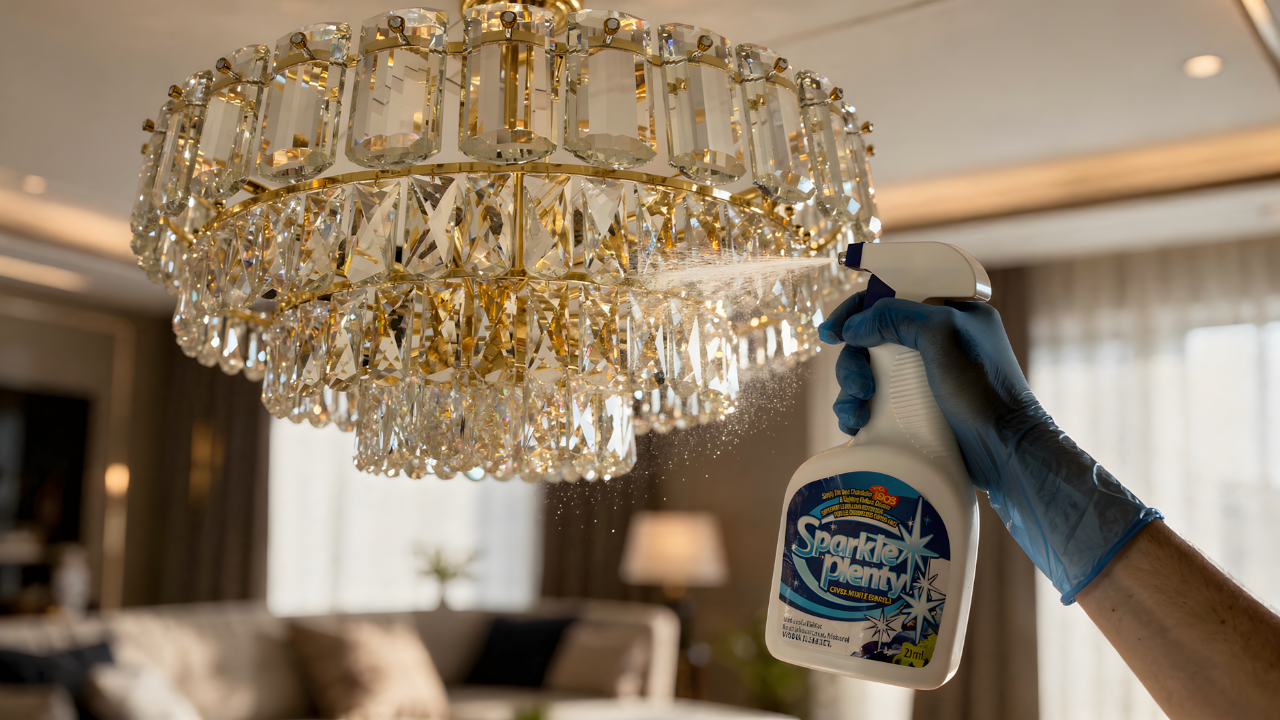
Match the method to the condition of your fixture.
Method 1 — The Easiest Way to Clean a Chandelier (Drip-Dry Spray)
- Turn off the power at the circuit breaker and let bulbs cool fully — at least 20 minutes. Loosely cover bulb sockets to keep liquid away from electrical contacts.
- Lay a drop cloth beneath the chandelier to catch run-off. Add towels underneath for wood floors or carpet.
- Spray Sparkle Plenty from 15–20 cm away, working bottom to top until the crystals are dripping freely.
- Leave to air-dry for 10 minutes, blot any liquid pooling in candle cups, then keep the power off for at least two hours before switching back on.
Looking for the spray used in this guide? Sparkle Plenty Crystal Chandelier Cleaner Spray is a drip-dry, no-rub formula that dissolves dust and grime on contact — no wiping or dismantling required. View Sparkle Plenty Crystal Chandelier Cleaner Spray
Method 2 — Manual Wipe-Down (for light surface dust)
Mix one part isopropyl alcohol with four parts distilled water. Mist onto a lint-free cloth — not directly at the fitting — and wipe each crystal one by one. Follow immediately with a dry cloth. Wipe the frame with a dry cloth only. No liquid, no chemicals on the frame at any point.
Method 3 — Full Disassembly (for neglected fixtures)
If the chandelier has years of grease or heavy grime on it, a spray will not be enough on its own. Take photos of the whole fixture from every angle first so you know where everything goes back. Remove crystals and pendants carefully, wash in warm soapy water, rinse with distilled water, and dry with a lint-free cloth. Wear white cotton gloves to avoid fingerprints. Keep all moisture well away from wiring, lamp holders, and electrical parts throughout.
How Often Should You Clean Your Chandelier?
The right schedule depends on where the fixture is and how much airborne residue it picks up.
| Location | Frequency | Why |
| Kitchen or dining room | Every 3–6 months | Cooking grease and steam settle quickly on glass and crystal |
| Hallway or entrance | Every 6–12 months | Open doors bring in outdoor dust, pollen, and debris |
| Living room or bedroom | Every 12 months | Moderate dust, low grease or moisture exposure |
| Low-traffic rooms (guest rooms, formal dining) | Every 12–24 months | Minimal use slows build-up significantly |
| All locations | Bi-weekly wipe | A dry microfibre cloth pass between cleans keeps dust from settling |
For bi-weekly upkeep, a dry microfibre cloth wipe of the frame and accessible crystals is all you need. Avoid spraying any liquid on the frame during routine maintenance — even mild cleaning products can wear down metal coatings with repeated use.
Frequently Asked Questions
Can I clean a chandelier without taking it down?
Yes — and for most home chandeliers, that is exactly what you should do. The drip-dry spray method and the in-place wipe-down both work well while the fixture stays hanging. Full disassembly is only needed when a chandelier has years of heavy grease or grime that a surface clean cannot shift.
Will the spray damage my floor or carpet?
It can leave marks if the floor is not properly protected. Always lay a drop cloth that reaches well beyond the width of the chandelier before you spray. Add absorbent towels underneath for extra protection on wood floors or carpet, and clear any pooled liquid as soon as the fixture has dried.
Do I need a professional to clean my chandelier?
Not for most home chandeliers. Switching the power off and following the right method is enough for safe, effective cleaning. A professional is worth considering for very large or antique fixtures, chandeliers fixed at a significant height, or fittings with parts that are fragile or hard to replace.
Can I clean a crystal chandelier with vinegar or a homemade cleaner?
While vinegar is a common household cleaning solution, it is not suitable for chandeliers. Its acidic content can damage metal frames, corrode the fine wires holding crystal drops, and etch glass surfaces over time. A purpose-built, pH-neutral cleaner like Sparkle Plenty is the safer choice — it cleans crystal and glass effectively without any risk of damage.
Whether you are restoring an older crystal fitting or maintaining a modern glass chandelier, regular cleaning keeps your lighting brighter, safer, and looking its best. Browse our full range of crystal and glass chandeliers to find a fitting worth keeping spotless
Recent Posts
-

What Bulbs Do Chandeliers Use? E14, Lumens, Colour Temperature and Dimming Explained
Choosing a chandelier is only part of the decision. The bulbs still need to fit properly, provide t …3rd Oct 2026 -
Rocker, Intermediate, Fan Isolator and Cooker Switches Explained: What Does Each One Do?
Electrical switches can look very similar on the wall while doing very different jobs. Much of the …22nd Sep 2026 -

How Many Downlights Do You Need? Plan the Layout Before You Install
Downlights are often arranged on a ceiling before anyone has asked the most important question: what …10th Sep 2026