
Exterior Up and Downlights: Where They Work Best and What to Check Before You Buy
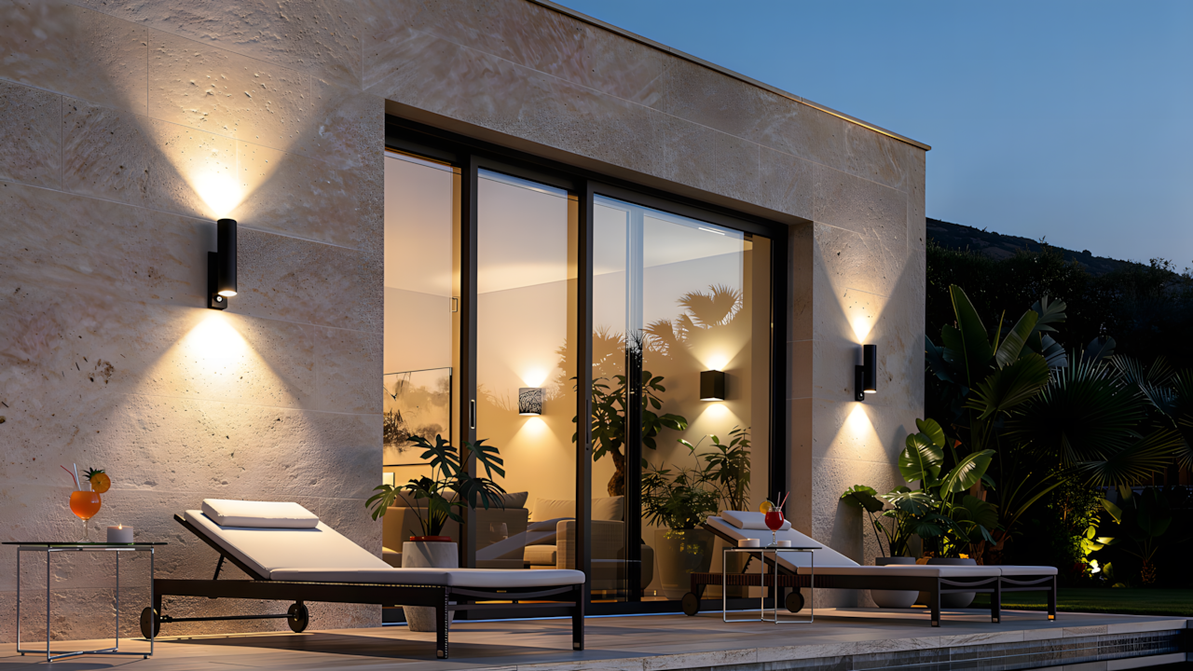
Exterior up and downlights can change the feel of an outside wall very quickly. Instead of simply adding brightness, they send light both upwards and downwards, helping to frame a doorway, bring texture out of brick or render, and make a patio or entrance feel more finished after dark.
At Arrow Electrical, we find that the best exterior wall lighting usually starts with the wall itself. A fitting can look right online, but still feel too bright, too decorative or too exposed once installed. When the placement, beam effect, IP rating, and finish all work together, an up and downlight can make an exterior feel calmer, sharper and more considered.
This guide is designed to help you choose exterior up and downlights with more confidence, whether you are lighting a front door, improving a side passage, or adding atmosphere to an outdoor seating area.
Key takeaways
Before comparing finishes and product styles, it helps to separate the visual effect from the practical checks. These are the points that usually shape a better exterior lighting decision.
- Use up and downlights where the wall surface can become part of the effect.
- Think about the GU10 lamp choice if you want more control over the final beam and warmth.
- Match the IP rating to the exposure level of the fitting’s position.
- Choose PIR motion sensing for practical routes, not every outdoor wall.
- Treat the finish as part of the exterior design, not an afterthought.
Quick answer: What exterior up and downlights are best for
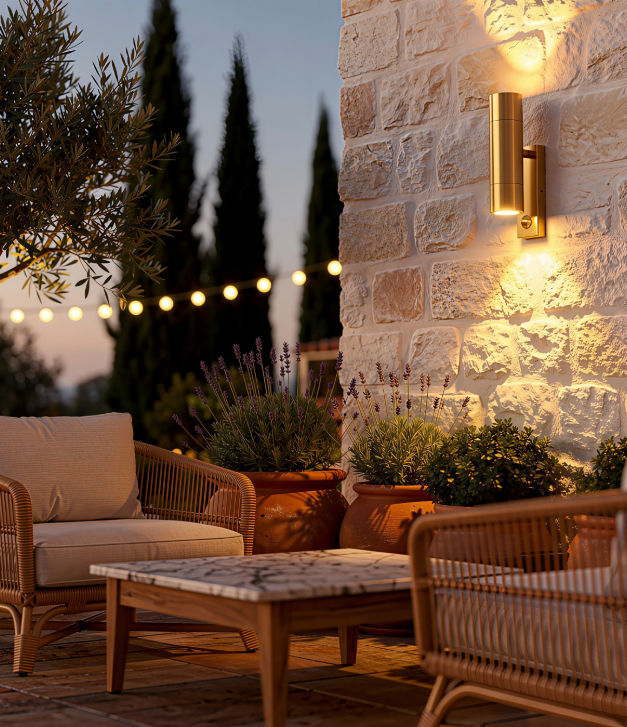
Exterior up and downlights are best for adding shape, contrast and practical visibility to outdoor walls. They are especially useful around front doors, porches, patios, garden walls, pillars, garages and side access routes.
They are not usually the right choice if the aim is to light a whole garden evenly. Their strength is more focused: they create a wash of light above and below the fitting, giving a wall more depth and helping the surrounding area feel more structured after dark.
A cleaner exterior effect usually comes from restraint: the right fitting, in the right position, with enough light to define the wall without overpowering it.
Where exterior up and downlights work best
The best place for an up and downlight is usually somewhere the wall can become part of the effect. Smooth render gives a cleaner wash, brick and stone create more texture, and timber or cladding can make the light feel warmer and more layered.
It is also worth considering how people move through the space. A front-door fitting has a different job from a patio wall light, and both differ from a sensor light near a side gate.
| Area | Why up and downlights work | What to check |
| Front door or porch | Frames the entrance and adds useful welcome light | Height, glare and whether a PIR sensor is helpful |
| Patio wall | Creates a softer evening backdrop | Warmth, finish and whether the beam feels too harsh |
| Garden wall or pillar | Adds structure and highlights texture | Spacing and whether the surface suits a visible beam |
| Side passage | Improves visibility on a practical route | Sensor use, IP rating and installation position |
| Garage or driveway | Adds light near access points | Brightness, motion sensing and fitting durability |
One well-placed fitting will often do more than several lights competing for attention. Repetition can work beautifully on longer walls, but it should look intentional rather than simply filling space.
Arrow Sales Insight: Sales feedback shows that the SP1303 is one of the strongest performers in this category. Its appeal appears to come from how versatile it is: customers use it across entrance walls, patios and outdoor feature areas, where the fitting needs to work both as a light source and as a visible exterior detail.
GU10 vs integrated LED: which format makes sense?
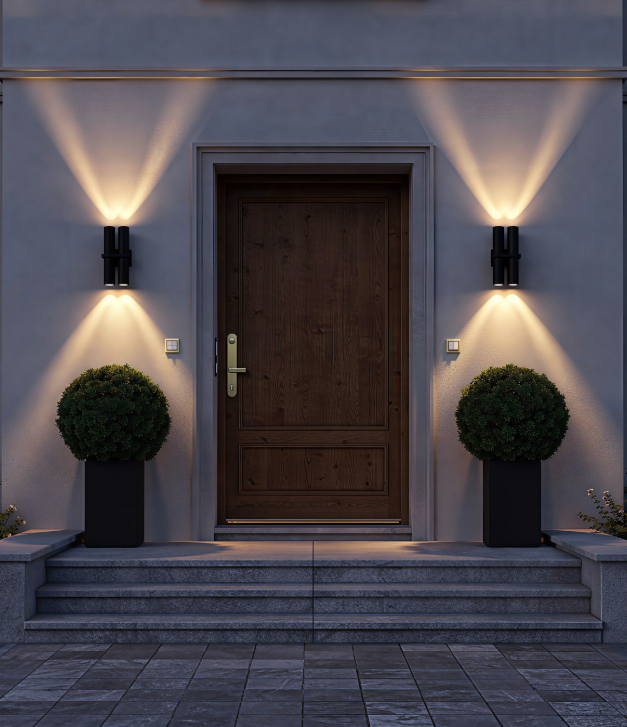
Many exterior up and downlights use GU10 lamps, which can be useful when the final effect matters as much as the fitting. Because the lamp is chosen separately, you have more room to adjust the look of the light after choosing the wall fitting itself.
That matters outdoors because small changes can make a noticeable difference. One GU10 lamp may create a sharper architectural line, while another may give a softer, wider spread. The right choice depends on whether the light is there to frame a doorway, wash a wall, or improve visibility along a route.
Arrow Product Insight: The SP1303 and SP2503SEN-BLK both require 2 x GU10 lamps, while the newer AR238006 fitting requires 4 x GU10 lamps. This makes lamp choice part of the planning process, especially for customers comparing beam effect, replacement flexibility and overall output.
Integrated LED fittings can still be a good option where simplicity is the priority. Arrow also has adjustable-beam integrated LED models in round and square designs, which may suit projects where beam control is built into the fitting rather than handled through separate GU10 lamp choice.
IP ratings: IP65 vs IP54 outdoors
IP rating is one of the most important checks for exterior lighting. It tells you how protected a fitting is against dust and water ingress, but it should always be considered alongside the exact installation position.
For more exposed walls, IP65 is often a sensible starting point because it offers stronger protection against dust and water jets. For more sheltered exterior positions, IP54 fittings can still be suitable where the product is designed for that use, but placement matters more.
| IP rating | What it generally means | Best treated as |
| IP54 | Protection against limited dust ingress and splashing water | A practical option for outdoor or more sheltered locations where suitable |
| IP65 | Dust-tight and protected against water jets | A stronger starting point for exposed exterior wall positions |
Outdoor lighting should always be fitted in line with the product specification and by a qualified electrician where required.
Finishes and visible style: black, white, brass, copper and stainless steel
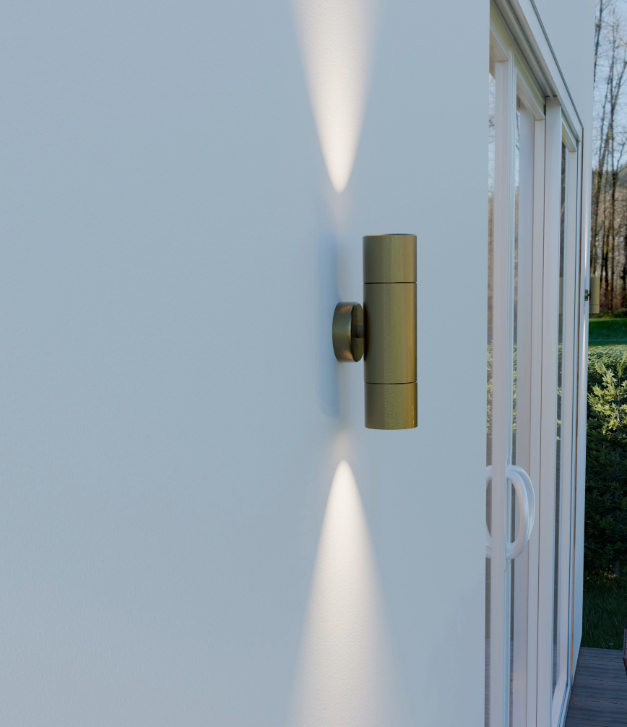
Exterior up and downlights are visible in daylight, so the finish is not just a night time decision. The fitting needs to sit comfortably with the wall surface, door hardware, house style and any other outdoor details.
Black is a strong default for modern homes because it looks crisp against render, brick and cladding. White can feel cleaner on lighter walls. Brass, copper, rust and stainless-steel finishes can bring more character, especially where the exterior already includes warmer metals or traditional details.
Arrow Sales Insight: For the SP1303, sales feedback suggests that warmer metal finishes and matt black are especially popular choices. That makes sense: customers are not only buying the light output, but also a visible exterior detail that needs to work with the door, wall finish and surrounding materials.
The mistake is choosing a finish in isolation. A fitting that looks smart on its own should still make sense beside the front door, handle, house number, wall colour and planting.
When a PIR motion sensor is worth choosing
A PIR motion sensor is useful where the light needs to respond to movement. That makes it practical for front doors, side access routes, bins, garages, driveways and occasional-use paths.
It is less important where the main goal is atmosphere. A patio wall or garden seating area may feel better with a standard switched or timed light, because repeated motion activation can interrupt the mood.
Arrow Customer Insight: Customer feedback highlights the SP2503SEN-BLK as a popular choice because of its PIR motion sensor. Customers often choose it for entrances and security-focused outdoor lighting, where automatic activation is useful for visibility and convenience after dark.
The safest way to think about PIR is as a convenience and visibility feature, not a complete security solution. It can help make entrances and routes easier to use after dark, but it should still be chosen for the right location.
Example exterior up and downlights worth comparing
Once you know where the fitting will go, it helps to compare examples by use case rather than appearance alone. These options show how IP rating, GU10 format, output, sensing and beam control can change the role of the light.
For a flexible GU10 wall light, the Outdoor Up and Down Wall Washer Exterior IP65 Light is a useful reference. This SP1303 fitting is IP65-rated and available in a wide range of finishes, making it a strong option where the fitting needs to suit the exterior design as well as the lighting plan.
For a stronger wall effect, the Outdoor Up and Down Light Duo 4 Lamps GU10 IP65 is the newer AR238006 option. It features dual pillars for upward and downward light output and uses 4 x GU10 lamps, so it suits larger surfaces where a more noticeable effect is desired.
For routes where movement activation is useful, the Up & Down Outdoor GU10 Wall Light with PIR Motion Sensor IP54 is the SP2503SEN-BLK fitting highlighted by Arrow’s sales feedback. It combines a GU10 up-and-down format with PIR motion detection, making it especially relevant for entrances and practical outdoor areas.
Its IP54 rating means placement should still be considered carefully, particularly in more exposed positions.
If you prefer an integrated LED route, Arrow also carries adjustable-beam models in round and square designs, including the Up/Down 6W Adjustable Double Beam LED Round Wall Light and the Up/Down Adjustable Double Beam Light. These are useful comparison points where built-in beam control matters more than separate lamp choice.
Exterior up and downlights FAQs
These are the questions that usually come up once people start comparing outdoor wall lights properly. The answers add a few extra checks that are worth considering before choosing a fitting.
Are exterior up and downlights good for front doors?
Yes, especially when the fitting is positioned to light the entrance without shining directly into someone’s eyes. For front doors, also think about how the light will look from the street and whether it works with nearby details such as the door handle, house number and porch finish.
Are GU10 up and downlights better than integrated LED?
Not always. GU10 is useful when you want to choose or change the lamp separately, but an integrated LED can be simpler when you prefer a fixed specification and fewer separate parts to think about.
What IP rating should exterior wall lights have?
The right IP rating depends on how exposed the fitting will be. A sheltered porch, open driveway wall and side passage can all need different levels of protection, so check the product rating against the actual position rather than treating “outdoor” as one single condition.
Do I need a PIR sensor?
A PIR sensor is most useful where automatic activation solves a practical problem, such as arriving home, using a side gate, or walking to bins after dark. If the light is mainly there for the evening atmosphere, a non-sensor fitting may feel calmer and less intrusive.
What colour temperature works best outdoors?
Warm white is usually the safest starting point for residential exteriors because it feels softer and more welcoming. Cooler light can work for practical routes, but it can feel harsh near seating areas, planting or textured walls.
Choose exterior up and downlights with the wall in mind
A good exterior up and downlight should feel connected to the wall, the route and the way the space is used after dark. The best choice is rarely just the brightest fitting; it is the one that gives the right effect in the right position.
Start with where the light will sit, how exposed the location is, and whether you need ambience, visibility or motion activation. Once those decisions are clear, the right finish, IP rating, GU10 setup, integrated LED format, or PIR option becomes much easier to choose.
Recent Posts
-
What Bulbs Do Chandeliers Use? E14, Lumens, Colour Temperature and Dimming Explained
Choosing a chandelier is only part of the decision. The bulbs still need to fit properly, provide t …3rd Oct 2026 -
Rocker, Intermediate, Fan Isolator and Cooker Switches Explained: What Does Each One Do?
Electrical switches can look very similar on the wall while doing very different jobs. Much of the …22nd Sep 2026 -
How Many Downlights Do You Need? Plan the Layout Before You Install
Downlights are often arranged on a ceiling before anyone has asked the most important question: what …10th Sep 2026