
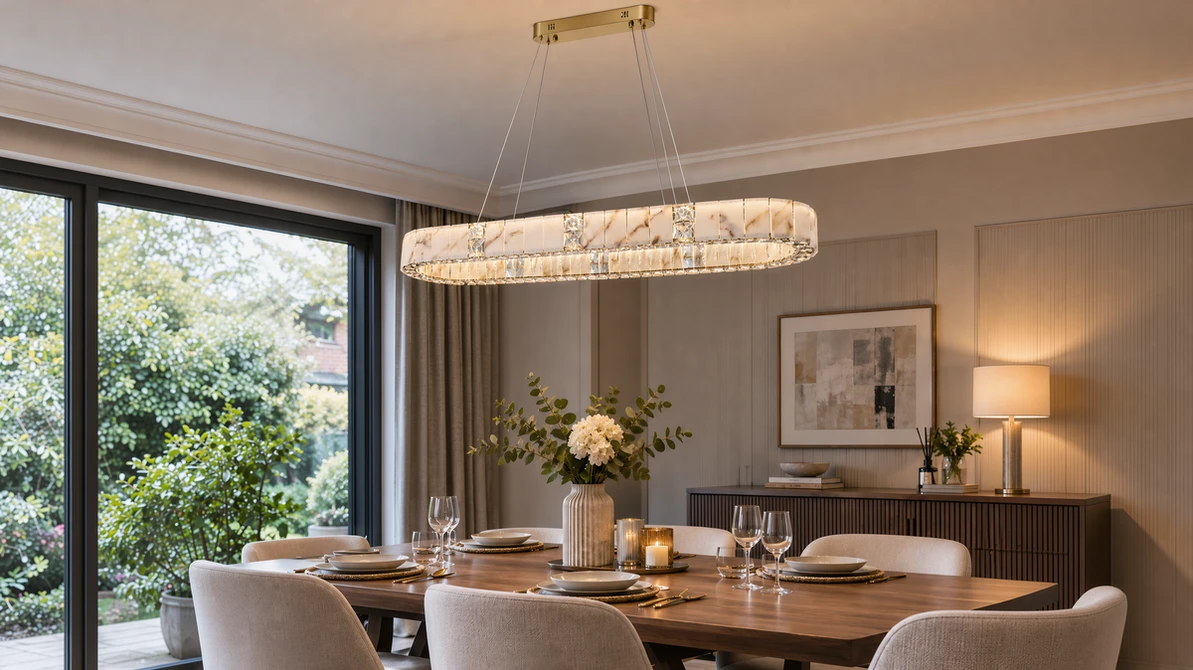
Alabaster Lighting: A Guide to Styling Alabaster Lights in UK Homes
Alabaster is a fine-grained, mineral-based natural stone prized for centuries in sculpture and architecture. When used in light fixtures like pendants, wall sconces, or flush mounts, it acts as a premium, living diffuser.
Unlike opaque stones, alabaster is semi-translucent, meaning the material allows the light to pass through its structure, yet it scatters the rays dynamically. Switched off, it looks like elegant solid stone in milky white or cream, with natural veining. Switched on, it transforms the light source, casting a warm, organic glow rather than harsh, direct light.
Alabaster Lights differ mainly from normal lighting in glow quality, glare reduction and material depth. These alabaster lights produce incredibly soft, visually warm light, naturally filtering harsh glare by distributing light evenly.
The natural veining, created by iron oxides and other mineral deposits as the stone formed, gives alabaster a timeless appeal and means no two fittings are identical.
Why Choose Alabaster Lights for your Home?
Alabaster is a luxury lighting material prized for its natural translucency, which transforms harsh illumination into a soft, atmospheric glow. Because of its unique crystalline structure, light does not simply pass straight through; instead, it is beautifully scattered and diffused through dimensional mineral layers.
- Every piece features entirely distinct veining formed over millions of years, ensuring no two light fixtures are ever identical.
- These veins run through the full thickness of the stone. Its varying mineral densities scatter the light as it passes through, softening it into a smooth, even glow.
- It possesses a physical density which adds a permanent luxury ambience to homes even when the light is switched off.
Designing with Alabaster Pendant Lights
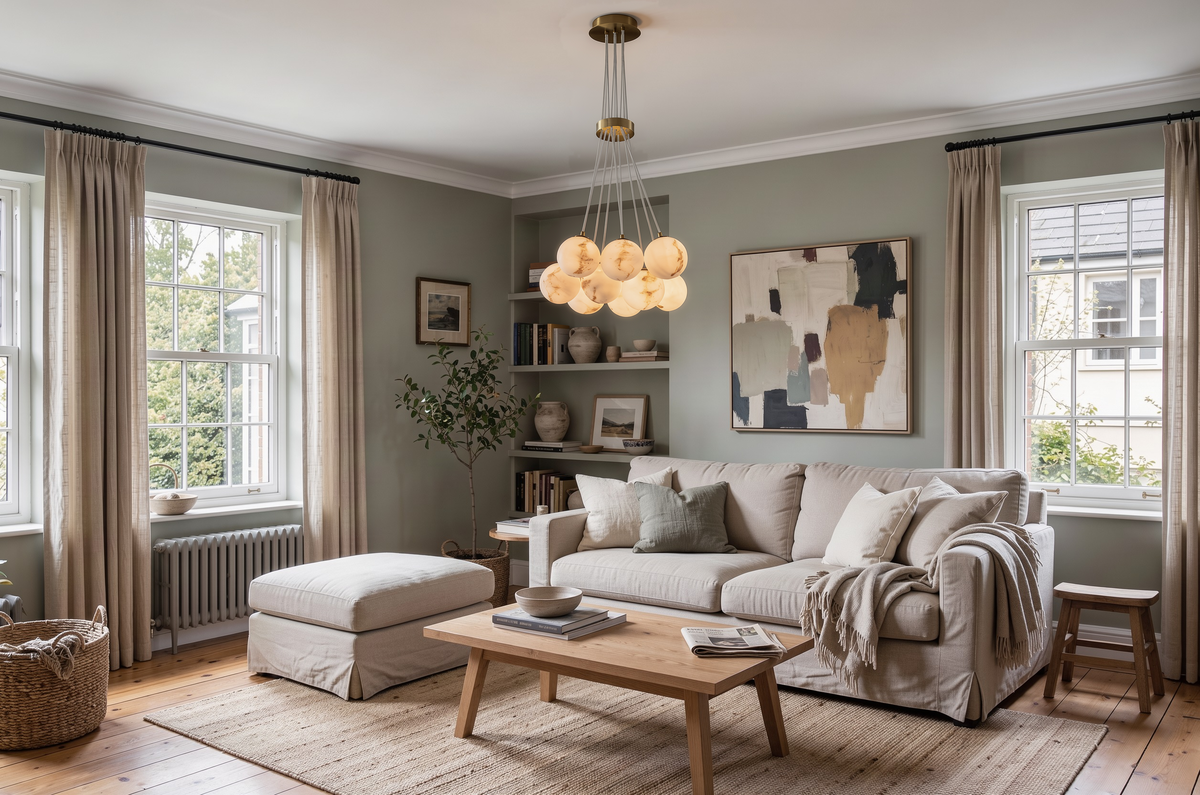
Integrating a luxury alabaster pendant light into your space balances structural presence with an ethereal diffusion of light. When styling these fixtures, matching the stone’s silhouette to your furniture layout dictates how it interacts with the room. Over a kitchen island, a row of four classic circular pendants creates a rhythmic boundary of soft, glare-free illumination. Above a dining table, a single, elongated 1200mm oval pendant mirrors the geometry below, casting a seamless canopy of low-glare light. For dramatic architectural voids, a cascading 9-globe pendant cluster — shades cast in resin alabaster — makes a strong statement in a multi-storey stairwell, while a singular, minimalist sphere pendant serves as a quiet anchor in an entryway.
Achieving the perfect look requires attention to scale and hardware details. Each premium alabaster pendant light features a versatile 1200mm drop length, allowing you to customise the hanging height relative to your ceilings. To seamlessly tie the stone into a wider interior palette, options are paired with timeless hardware finishes like brass, chrome, or black. Because the true beauty of alabaster lies in how it transitions from solid stone into a radiant jewel, ensuring these alabaster pendant lights are fully dimmable is essential to effortlessly shift the mood from bright functionality to an atmospheric evening glow. If you are exploring broader design styles beyond natural stone, Arrow Electrical’s wider curation of masterfully crafted pendant lights can help you determine the exact material mix for your project.
Maximising Space with Alabaster Flush Lights and Wall Lights
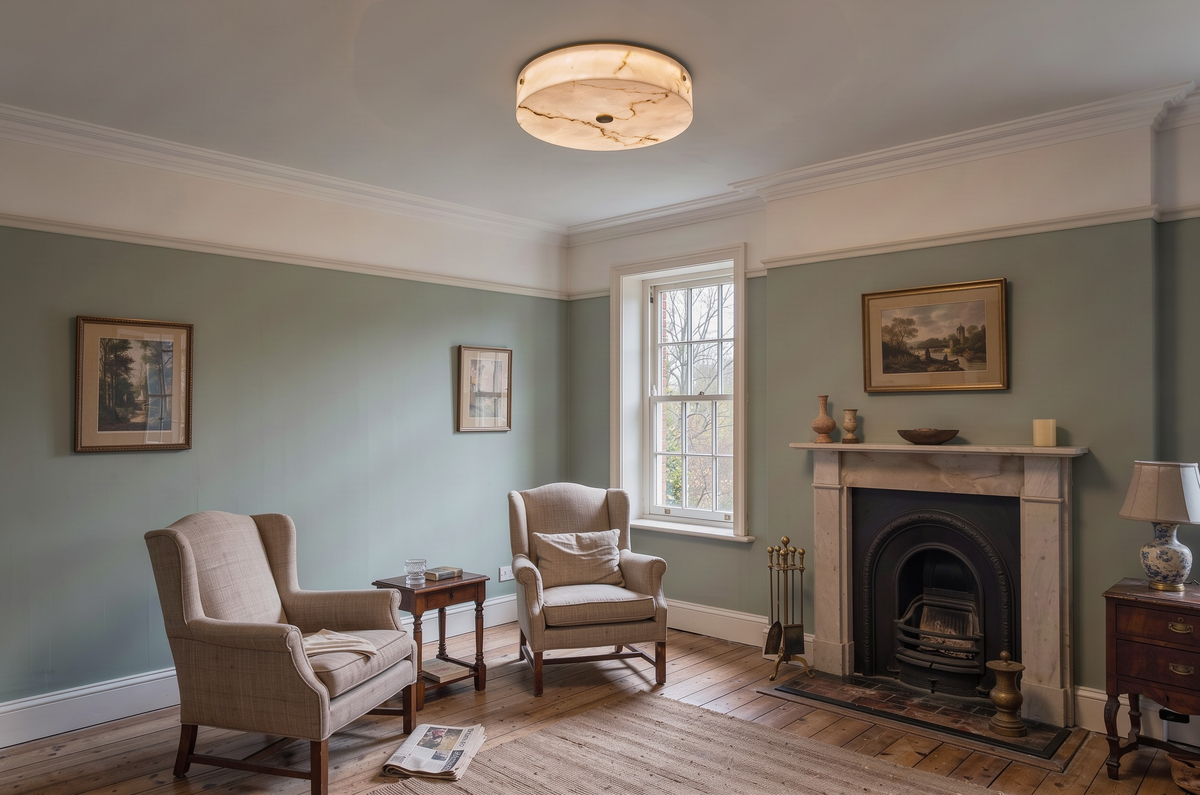
When designing for challenging interior footprints, strategic fixture placement completely shifts the perception of a room. Low-profile lighting solutions are perfect for elevating compact, low-ceilinged hallways and modern bedrooms without sacrificing precious headroom. Introducing an alabaster flush ceiling light allows you to bathe the upper architecture in a seamless, glare-free wash. Pairing this setup with a texturized fixture like our alabaster wall light introduces layered ambient illumination at eye level, softening harsh corner shadows to create a spacious, multi-dimensional environment.
Tailored Dimensions & Configurations: Available in ultra-slim 100mm and 150mm height profiles, these Ø500mm integrated LED flush lights provide a seamless, low-profile fit tailored specifically for restricted UK ceilings. To build upon this look, our collection offers stunning geometric versatility — including sleek vertical profiles, smooth circular discs, and elegant globe shapes — that can be configured in balanced pairs flanking a living room fireplace, or installed directly at the bedside to create a soothing, dimmable evening reading space.
Luxury in the En-Suite: Can You Use Alabaster Lighting in Bathrooms?
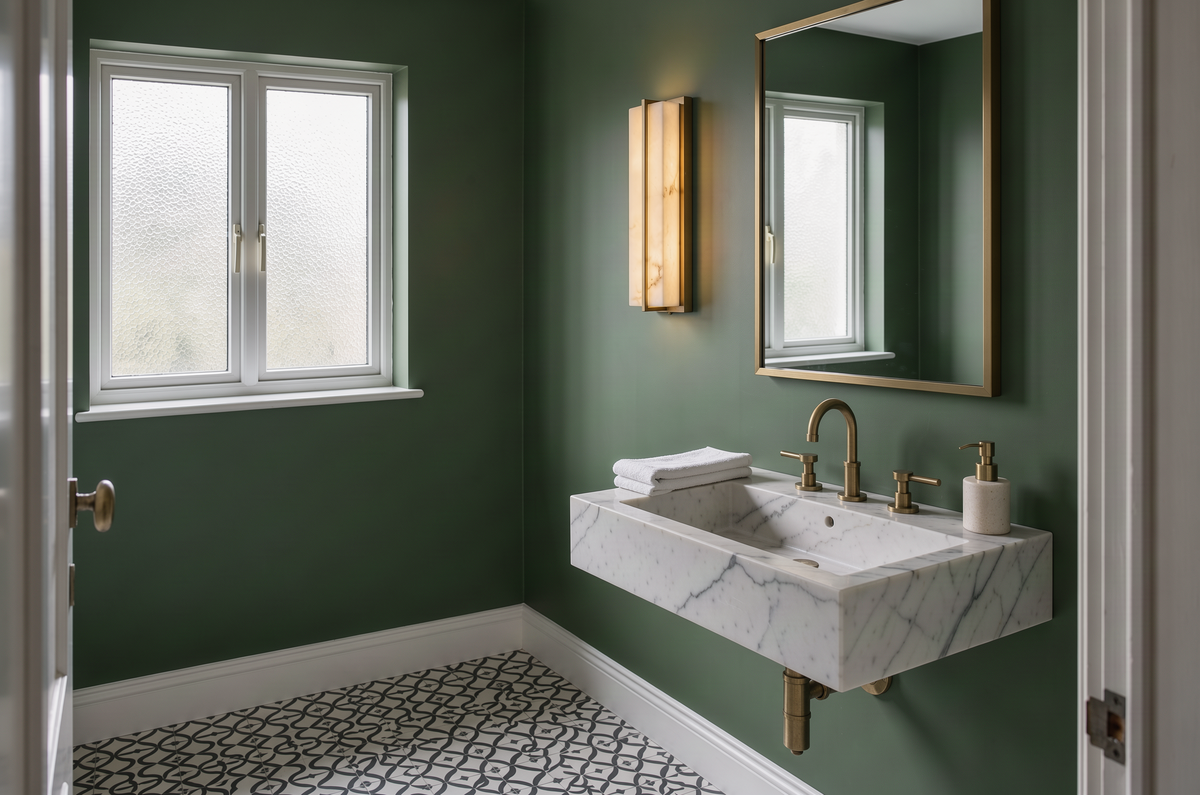
Bathrooms and en-suites are often dominated by cold, sterile surfaces like porcelain, stone tiling, and glass. Introducing the warm texture of natural stone is a brilliant design trick to soften these hard edges, instantly turning a functional space into a private sanctuary. While standard glass fixtures can cast harsh shadows and cold glares over vanities, alabaster interacts with light dynamically, diffusing the output to erase sharp lines and create an incredibly flattering, spa-like environment. Selecting fixtures with verified ingress protection allows you to safely bring this luxury material into wet zones without compromising on structural safety or interior style.
Positioning an IP54 alabaster rectangular wall light adds a sleek, architectural edge near washbasins where splashes can occur, utilising an efficient integrated system to flood the stone in a warm 3000K glow. For a beautifully layered, ambient scheme, suspending a statement ceiling fixture like the IP44 alabaster sphere pendant light — rated for bathroom zone 2 — establishes a magnificent overhead canopy. A key design advantage of this three-socket E27 setup is the creative flexibility it offers, allowing you to select a custom bulb colour temperature that complements your bathroom tiles and brings out the stone’s natural veining. As with any bathroom fitting, installation should be carried out by a qualified electrician.
Alabaster Lighting Comparison: Pendants, Flush Mounts, and Wall Lights
Choosing the right type of alabaster fixture depends entirely on your room’s dimensions and how you intend to use the space. While all alabaster stone offers the same signature glare-free diffusion, the structural design of the fixture changes how the illumination is distributed. Use this quick reference guide to see how pendants, flush mounts, and wall lights compare across key architectural and functional considerations.
| Fixture Type | Ideal UK Ceiling Height | Primary Light Output Type | Best Strategic Placement | Key Compliance Note |
| Pendant Lights | Standard ceilings (2.4m+) over tables and islands; clusters and stairwells (2.7m+) | Direct Ambient & Soft Task | Over dining tables, kitchen islands, and multi-storey stairwells | Require adjustable cables to set safe clearance heights above furniture. |
| Flush Ceiling Mounts | Low or Restricted ceilings (2.4m or below) | Wide, Diffused Overarching Ambient | Compact hallways, low-profile modern bedrooms, and dressing rooms | Low-profile depths (100mm–150mm) ensure maximum headroom compliance. |
| Wall Lights & Sconces | Versatile (Any ceiling height) | Layered Accent & Eye-Level Ambient | Flanking living room fireplaces, bedside reading zones, or vanities | Must check specific zone ratings (IP44/IP54) when installing in bathroom environments. |
Frequently Asked Questions
How does the quality of light from alabaster differ from frosted glass?
Glass scatters light at its outer surface, creating a flat, uniform panel. Alabaster has true mineral volume; light travels through its microscopic mineral layers. This internal bounce absorbs harsh hotspots, ensuring the fixture glows beautifully from within rather than just looking lit.
Should alabaster lighting be the primary light source in a room?
Alabaster produces soft, ambient light rather than strong directional output, so it works best as part of a layered scheme. For task lighting — reading, cooking, or work surfaces — pair your alabaster fittings with downlights or spotlights. The two complement each other well: alabaster handles atmosphere, directional sources handle function.
Recent Posts
-

Alabaster Lighting: A Guide to Styling Alabaster Lights in UK Homes
Alabaster is a fine-grained, mineral-based natural stone prized for centuries in sculpture and archi …12th Oct 2026 -
What Bulbs Do Chandeliers Use? E14, Lumens, Colour Temperature and Dimming Explained
Choosing a chandelier is only part of the decision. The bulbs still need to fit properly, provide t …3rd Oct 2026 -
Rocker, Intermediate, Fan Isolator and Cooker Switches Explained: What Does Each One Do?
Electrical switches can look very similar on the wall while doing very different jobs. Much of the …22nd Sep 2026